By Colin Foster
Updated November 2026
Learning toys for newborns work best when they match what a baby can actually see, hear and grip in the first few months. This guide explains which sensory features matter, how to rotate toys through the day, and which mistakes to avoid. By the end, you’ll have a short, practical plan for choosing and using learning toys for a newborn without buying more than you need.
Know What a Newborn Can Actually Process
In the first eight to twelve weeks, most babies focus best on objects about 8 to 12 inches from their face, roughly the distance to a caregiver’s face during feeding. Color contrast matters more than bright color at this stage. High-contrast black, white and red patterns are easier for newborns to track than pastels. Sounds should be soft and gentle, since a newborn’s startle response is strong.
Choose Toys by Sense, Not by Label
Many products are marketed as “educational,” but for a newborn the useful categories are simpler. Look for three things:
- Visual: high-contrast cards, mobiles, or a soft book with bold shapes.
- Auditory: a rattle or shaker with a quiet sound, or a toy that plays a short melody at low volume.
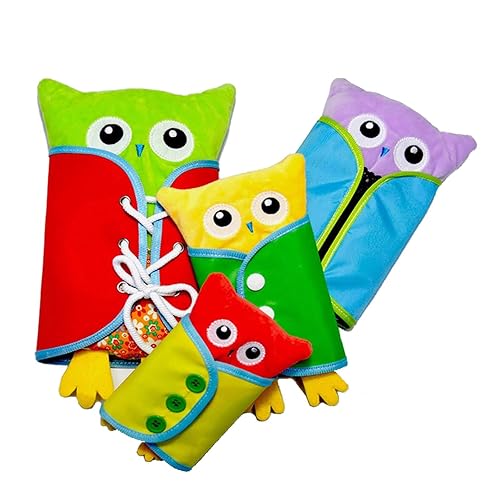
- Tactile: soft fabric with different textures, a lightweight teether once gums start to change.
Skip anything with small detachable parts, cords longer than 12 inches, or batteries that are accessible without a screw-secured compartment. The U.S. Consumer Product Safety Commission publishes guidance on infant toy safety that’s worth reading before you buy.
Set Up a Simple Daily Rotation
Newborns tire quickly, often after 5 to 10 minutes of focused play. Rather than leaving many toys out, keep two or three within reach and swap them every few days. A practical routine looks like this:
- Place one high-contrast card or mobile in view during awake time after a feed.
- Use a rattle during gentle hand-to-hand play, keeping the sound soft.
- Offer a textured fabric toy during tummy time, supervised at all times.
- Stop when your baby looks away, fusses, or yawns. That is their signal to rest.
Learning Toys for Newborn Routines: Tools to Have on Hand
| Toy type | What it supports | When to start |
|---|---|---|
| High-contrast cards | Visual tracking | From birth |
| Soft rattle | Hearing and hand-eye reflex | From birth, with supervision |
| Textured fabric toy | Touch and grasping | From about 4 weeks |
| Lightweight teether | Oral exploration | From about 3 to 4 months |
For a longer look at how toy types line up with development, see 6 Best Newborn Learning Toys: Top Picks for Babies Compared (2026).
Common Mistakes to Avoid
- Leaving toys in the crib. Anything near a sleeping newborn is a suffocation risk, so keep sleep spaces clear.
- Using loud or sudden sounds. Overstimulation shows up as arching, fussing or turning away.
- Buying for milestones too early. Most toys marketed for “3 months plus” are not useful at birth.
- Expecting long sessions. Two-minute bursts several times a day beat one long session.
Recommended Gear
A soft black-and-white activity book gives a newborn bold, trackable shapes at close range; search for View on Amazon.
A gentle wrist rattle keeps small hands busy and reinforces the sound-to-movement connection; search for View on Amazon.
A play gym with a removable hanging toy set lets you swap visual targets easily during tummy time; search for View on Amazon.
FAQ
When should I start using learning toys with my newborn?
You can start with high-contrast cards and soft rattles from birth. Textured toys work best once your baby can hold their head up during tummy time, usually around 4 weeks.
How long should a newborn play session last?
Keep sessions to about 5 to 10 minutes, then let your baby rest. Watch for looking away, fussing or yawning as signs to stop.
Do I need expensive learning toys for a newborn?
No. Simple high-contrast cards, a soft rattle and a textured cloth often cover the first months well. A budget pick that meets safety guidance is usually enough.
Conclusion
Learning toys for newborns should be simple, safe and matched to what a baby can see, hear and touch right now. Keep two or three options in rotation, stop at the first sign of tiredness, and follow current safety guidance. Your baby’s development grows from everyday interaction far more than from any single product.
Related reading
- VTech Learning Walker Toys R Us: How to Choose and Set Up the Right Walker
- VTech Learning Toys for 2 Year Olds: How to Choose the Right Ones
- VTech Electronic Learning Toys: How to Choose the Right Ones for Your Child
- Toys for Learning Disabilities: 7 Best Picks Compared for Home Learning (2026)
Ready to choose one?
About Colin Foster
Colin Foster is part of our editorial team and reviews and edits our early learning at home guides, checking product details against manufacturer specifications and owner feedback.