 By Colin Foster
Updated November 2026
Choosing learning toys for nonverbal children is harder than it looks. A toy that works well for one child may frustrate another, and many products are marketed with claims that a parent cannot easily check. This list is built around a few practical criteria: whether the toy gives a clear way to communicate or practice sounds, whether it works without spoken language, how durable and easy to clean it is, and whether the manufacturer publishes enough detail to set expectations. Every pick below was selected from specifications, brand reputation and patterns in owner feedback. None of these products were tested by us in a lab or at home.
Our top picks at a glance
- 1
 TOP CHOICEBest overallMontessori Language Learning Toys with 224 WordsView on Amazon
- 2
 TOP CHOICEBest for hands-on playBusy Board Dinosaur Montessori ToysView on Amazon
- 3
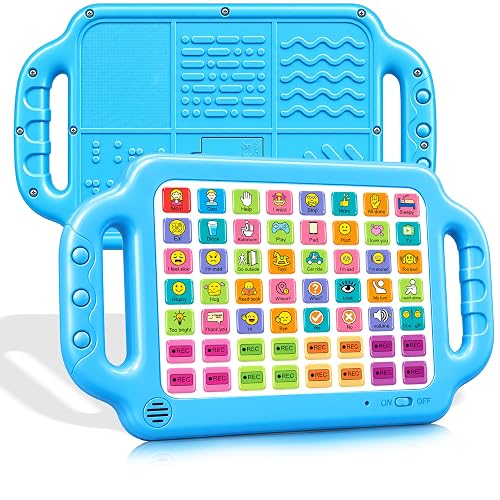 TOP CHOICEBest for a recordable voice devicePortable Speech Therapy Toys with 16 Recordable ButtonsView on Amazon
- 4
 Best for vocabulary through touch audioInteractive Educational Toy with 23 ThemesView on Amazon
- 5
 Best for phonemic awarenesshand2mind Phoneme PhoneView on Amazon
- 6
 Best for a portable communication toolAutism Sensory Toy for Home and School UseView on Amazon
- 7
 Best for rechargeable talking flash cardsAutistic Kids Non Verbal Learners Friendly Dino Talking Flash CardsView on Amazon
Our Top Picks
| Product | Best for | Key feature |
|---|---|---|
| Montessori Language Learning Toys with 224 Words | Building word recognition with picture cards | 224 words with spoken audio |
| Busy Board Dinosaur Montessori Toys | Hands-on fine motor and attention play | Multiple sensory activities on one board |
| Portable Speech Therapy Toys with 16 Recordable Buttons | Practicing recorded words and phrases | 16 recordable buttons plus preset sounds |
| Interactive Educational Toy with 23 Themes | Vocabulary through touch-activated audio | 500 words across 23 themes |
| hand2mind Phoneme Phone | Phonemic awareness and sound-letter links | Phoneme-based sound buttons |
| Autism Sensory Toy for Home and School Use | Portable, on-the-go communication practice | Rechargeable with silicone case |
| Autistic Kids Non Verbal Learners Friendly Dino Talking Flash Cards | Rechargeable flash card practice | Talking flash cards with stickers |
Montessori Language Learning Toys with 224 Words
Montessori Language Learning Toys with 224 Words, Pocket Speech Therapy Toys, Sensory Learning Kit, Educational Toys for Kids Airbition Talking Flash Cards for Toddlers Ages 1‑4,224 Words English Blue
Best for: Building word recognition with picture cards
This set suits families who want a structured, self-paced way to hear and match words. It fits children who respond well to visual cards and repetition, and it can be used by a parent, teacher or therapist with the same materials.
Key specs
- 224 words in the listing title
- Designed as a pocket-sized speech and sensory learning kit
- Talking flash card format with English audio
Pros
- Large vocabulary in one set
- Portable enough for car rides and waiting rooms
- Works well for independent card-matching practice
Cons
- Audio is limited to the set’s pre-recorded words
- Less useful for children who need a full communication system
Bottom line: A good first choice for families who want a broad word set and a simple, repeatable routine. Pair it with real objects so the words connect to daily life.
Busy Board Dinosaur Montessori Toys
Busy Board – Dinosaur Montessori Toys for 3 4 5 Year Old – Sensory Toys for Autistic Children – Toddler Travel Toys – Busy Book for Toddlers Activities as Boys Girls Gift
Best for: Hands-on fine motor and attention play
A busy board works for children who need tactile input and sustained attention before they can focus on language tasks. It is useful at home or during car travel, and it gives a parent a shared activity that does not depend on speech.
Key specs
- Dinosaur theme for ages 3 to 5 according to the listing
- Sensory and Montessori-style activity board
- Intended for travel and home use
Pros
- Builds fine motor skills through buttons, latches and zippers
- Gives a non-verbal child a clear task to complete
- Easy to store and carry
Cons
- Does not build language directly, so pair it with speech or sign practice
- Small parts can be a concern for children who mouth objects
Bottom line: Best for families who want a calming, hands-on activity that supports attention and motor skills. Supervise closely with younger children.
Portable Speech Therapy Toys with 16 Recordable Buttons
Portable Speech Therapy Toys with 16 Recordable & 38 Preset Button, Stickers, Adjustable Volume for ADHD Stroke ALS Aphasia AAC Device for Autism, Communication Talking Tool for Nonverbal Kids Adults
Best for: Practicing recorded words and phrases
This device suits children and adults who benefit from a voice-output button, including those working with a speech-language pathologist. Parents can record their own voice, which can make practice feel familiar.
Key specs
- 16 recordable buttons and 38 preset buttons according to the listing
- Adjustable volume
- Includes stickers for labeling buttons
Pros
- Recordable buttons let you use your own words and phrases
- Adjustable volume suits different settings
- Stickers help the child learn button locations
Cons
- Button arrangement takes time to set up well
- Not a full AAC system for complex communication
Bottom line: A strong option for families who want custom recorded messages. Check with a speech-language pathologist before relying on it as a primary communication method. Consult a professional for individual needs.
Interactive Educational Toy with 23 Themes
Interactive Educational Toy with 23 Themes, Touch Activated Audio Book for Vocabulary Development and Early Education 500 Words Sound Book for Kids
Best for: Vocabulary through touch-activated audio
A touch-activated audio book fits children who learn by pressing and listening. It works well for building vocabulary across everyday themes, and it can be used in shared reading.
Key specs
- 23 themes according to the listing
- 500 words per the listing title
- Touch-activated sound book format
Pros
- Wide range of themes for everyday vocabulary
- Simple one-touch operation
- Good for repeated listening and pointing practice
Cons
- Fixed audio content cannot be customized
- Works best with children who can attend to pages
Bottom line: Suited to families who want a broad vocabulary tool with minimal setup. Combine it with real-world labeling for better transfer.
hand2mind Phoneme Phone
hand2mind Phoneme Phone, Speech Therapy Toys, Autism Learning Materials, Toddler Speech Development Toys, Dyslexia Tools for Kids, Phonemic Awareness, ESL Teaching Materials, Reading Phones
Best for: Phonemic awareness and sound-letter links
This phone-style toy is built around individual sounds rather than whole words. It suits children working on early reading foundations, speech sound practice, or the sound patterns that come before spoken words.
Key specs
- Phoneme-based sound buttons
- Listed as a speech therapy and phonemic awareness tool
- Intended for toddlers and early learners
Pros
- Focuses on sounds, which is useful for early speech and reading
- Well-established educational brand
- Simple layout for young children
Cons
- Requires an adult to guide sound-to-letter practice
- Less suited to children who need a full communication system
Bottom line: A good pick for families and therapists focused on sound awareness. Pair with speech therapy goals and consult a speech-language pathologist for targeted use.
Autism Sensory Toy for Home and School Use
Autism Sensory Toy for Home & School Use – Speech Therapy Talking Tool for Nonverbal Kids – Gift Christmas Stocking Stuffer Rechargeable AAC Device for Autism: Communication Tools with Silicone Case
Best for: Portable, on-the-go communication practice
This rechargeable talking tool suits families and classrooms that need something easy to carry between settings. The silicone case adds some protection for everyday handling.
Key specs
- Rechargeable according to the listing
- Silicone protective case
- Designed for home and school use
Pros
- Portable and rechargeable
- Silicone case can help with drops and wear
- Useful across home and school routines
Cons
- Recording and button options may be limited compared with larger devices
- Battery life varies with use, so check charging habits
Bottom line: A practical choice for families who need one device to move between home and school. Confirm features with the manufacturer before purchase.
Autistic Kids Non Verbal Learners Friendly Dino Talking Flash Cards
Autistic Kids Non Verbal Learners Friendly, Teach Independence, Rechargeable, American Accent, Phonics, Speech Therapy Dinosaur Talking Flash Cards with Stickers, Dino Speech Toy for Toddlers
Best for: Rechargeable talking flash card practice
These talking cards suit children who respond to dinosaur themes and visual cards. The rechargeable design means fewer battery swaps, and the stickers allow customizing the set.
Key specs
- Rechargeable according to the listing
- American accent audio per the listing
- Includes stickers
Pros
- Rechargeable, which reduces battery replacement
- Dinosaur theme can motivate many young children
- Covers phonics and speech practice
Cons
- Card content is fixed, so expansion may be limited
- Best for children who engage with picture cards
Bottom line: Good for families who want a motivating, rechargeable flash card set. Start with a few cards at a time and build up gradually.
Buying Guide
Output method: audio, visual or tactile
Think about how your child takes in information. Some children respond best to spoken words, others to pictures, and some need touch or movement. Talking flash cards and sound books suit children who attend to audio. Visual card sets and busy boards suit children who learn through sight and hands-on play.
Good picks for this: Montessori Language Learning Toys with 224 Words, Interactive Educational Toy with 23 Themes
Recordable versus fixed content
Fixed-content toys are ready to use but cannot match your family’s vocabulary. Recordable devices let you add words that matter at home, such as names, favorite foods or routine phrases. Check how many buttons can be recorded and how easy the recording process is.
Good picks for this: Portable Speech Therapy Toys with 16 Recordable Buttons, Autism Sensory Toy for Home and School Use
Portability and battery type
If your child travels between home, school and therapy, a rechargeable, lightweight toy is easier to manage. Look for stated battery type and charging method. Rechargeable options reduce the need to buy replacement batteries, though battery life depends on how often the toy is used.
Good picks for this: Autism Sensory Toy for Home and School Use, Autistic Kids Non Verbal Learners Friendly Dino Talking Flash Cards
Speech and sound focus
Some toys target whole words, while others focus on individual sounds. Phonemic awareness tools are useful for children working on sound patterns, while word-based sets support vocabulary. Match the toy to the goal your speech-language pathologist or teacher has set.
Good picks for this: hand2mind Phoneme Phone, Interactive Educational Toy with 23 Themes
Durability and materials
Children who mouth, throw or repeatedly press buttons put toys under strain. Check whether the manufacturer describes the casing, buttons and any protective case. Silicone cases can help with drops, and sturdy cardboard or laminated cards last longer than thin paper.
Good picks for this: Autism Sensory Toy for Home and School Use, Busy Board Dinosaur Montessori Toys
Age and developmental fit
Listings often give an age range, but developmental level matters more than age. Start with items that match your child’s current attention span and motor skills. Many families find that a toy designed for a younger range works well as a starting point.
Good picks for this: Busy Board Dinosaur Montessori Toys, Montessori Language Learning Toys with 224 Words
Supervision and safety
Check for small parts, cords and battery compartments. Supervise young children during play and store batteries out of reach. Look at the manufacturer’s stated age guidance and follow it.
Good picks for this: Autistic Kids Non Verbal Learners Friendly Dino Talking Flash Cards, Interactive Educational Toy with 23 Themes
FAQ
Are learning toys enough to support a nonverbal child’s communication?
Toys can support communication practice, but they usually work best alongside speech therapy, sign language or a structured communication system. A speech-language pathologist can recommend goals and tools that fit your child’s needs.
Should I choose a recordable device or a fixed-content toy?
Recordable devices let you use your own words, which helps when vocabulary is specific to your home. Fixed-content toys are simpler to start with. Many families use both, depending on the goal.
How do I know if a toy is the right level?
Watch how your child interacts with it for a few short sessions. If they engage and can complete small steps, the level is about right. If they become distressed or disengaged quickly, try a simpler option.
Are talking flash cards useful for children who are not yet reading?
Yes, picture-based cards with audio can build vocabulary and word recognition before reading. Pointing, matching and naming activities are useful even without written words.
How often should my child use these toys?
Short, regular sessions usually work better than long ones. Many families use five to ten minutes at a time, adjusting based on attention and mood. Ask your child’s therapist for guidance on frequency.
Can these toys be used at school?
Some products, such as portable devices and flash card sets, are easy to share between home and school. Check with your child’s teacher and therapist before bringing a new toy into the classroom.
What should I do if my child loses interest?
Rotate toys, change the theme, or pair the toy with a favorite activity. Interest often returns when the toy is introduced again after a break.
Conclusion
For a broad, structured word set, the Montessori Language Learning Toys are a practical starting point. Families who want hands-on attention building may prefer the Busy Board. For custom messages, the Portable Speech Therapy Toys with recordable buttons offer the most flexibility. If your focus is sound awareness, the hand2mind Phoneme Phone fits well, while the Autism Sensory Toy suits portable use. Families who want rechargeable flash cards can look at the Dino Talking Flash Cards, and the Interactive Educational Toy with 23 Themes works for everyday vocabulary. Match the toy to your child’s communication goals, and review progress with a speech-language pathologist or other qualified professional.
You may also find these related guides helpful: Top 5 Children's Interactive Learning Toys for Toddlers (2026), Top 7 Early Learning Montessori Toys for Toddlers and Preschoolers, Toys for Learning Letters: How to Choose and Use the Best Ones at Home, and Toys for Learning Body Parts: 6 Ideas That Build Early Vocabulary.
Sources
- Speech and language developmental milestones and guidance on communication disorders from the American Speech-Language-Hearing Association
- Toy safety guidance, age labeling and choking hazard information from the U.S. Consumer Product Safety Commission (cpsc.gov)
- Information on communication supports and learning strategies for autistic children
Related reading
- Children's Computer Learning Toys: How to Choose the Right Ones (2026)
- 6 Best Children's Learning Toys Games for Preschoolers (2026)
About Colin Foster
Colin Foster is part of our editorial team and reviews and edits our early learning at home guides, checking product details against manufacturer specifications and owner feedback.


