 By Colin Foster
Updated November 2026
Choosing learning toys for toddler ages 1 to 3 can feel overwhelming, because almost every box promises language, math, motor skills and problem solving. What a busy parent usually needs is a shortlist that matches a child’s stage, the space available at home and how much supervision the toy will need. The five picks below were chosen by comparing manufacturer specifications, brand track record for toddler products and the patterns owners commonly describe in their feedback. We did not test these toys ourselves, so treat the notes as research-based guidance rather than hands-on results.
Our top picks at a glance
- 1
 TOP CHOICEBest overallMontessori Language Learning Toys with 224 Words, Pocket Speech TherapView on Amazon
- 2
 TOP CHOICEBest for small spacesVTech Little CEO Learning Desk Toddler Activity CenterView on Amazon
- 3
 TOP CHOICEBest for hands-on sortingMontessori Sensory Toys, Toddler Toy 2-3, Boy Girl Birthday Gifts, WooView on Amazon
- 4
 Best for pretend playPlay-Act Learning Toys for 1 2 3 Years Old, Counting, Matching & SortiView on Amazon
- 5
 Best for early languagehahaland 5-Language Learning Tablet Toy for Toddler 1-3 with Speech TherapyView on Amazon
Our Top Picks
Quick Comparison
| Product | Best for | Key feature |
|---|---|---|
| Montessori Language Learning Toys with 224 Words | Vocabulary building | Pocket-size flash cards with word and picture pairs |
| VTech Little CEO Learning Desk Toddler Activity Center | Small spaces and independent play | Desk-style activity center with built-in learning panels |
| Montessori Sensory Toys, Toddler Toy 2-3 | Hands-on sorting and fine motor work | Wooden blocks, puzzles and a shape sorter in one set |
| Play-Act Learning Toys for 1 2 3 Years Old | Pretend play and counting | Nine farm animals and a train for matching and sorting |
| hahaland 5-Language Learning Tablet Toy for Toddler 1-3 | Early language exposure | Tablet-style toy with sounds, music and five languages |
Montessori Language Learning Toys with 224 Words, Pocket Speech Therapy Toys, Sensory Learning Kit
Montessori Language Learning Toys with 224 Words, Pocket Speech Therapy Toys, Sensory Learning Kit, Educational Toys for Kids Airbition Talking Flash Cards for Toddlers Ages 1‑4,224 Words English Blue
Best for: Building vocabulary through word and picture pairing.
This set suits parents who want a portable, low-noise way to introduce everyday nouns, actions and objects to a toddler between roughly 1 and 4 years old. The flash card format works well for car rides and waiting rooms because it needs no batteries or setup.
Key specs
- 224 words in the set, per the listing title
- Flash card format with picture and word on each card
- Marketed for ages 1 to 4 and for English-language learners
Pros
- Portable and easy to store in a diaper bag
- Pairs images with spoken and printed words
- Works without screens or batteries
Cons
- Requires an adult to model words for best results
- Cards can bend or tear if chewed by younger toddlers
Bottom line: A strong first choice for parents focused on language, especially those who want something that travels well.
VTech Little CEO Learning Desk Toddler Activity Center
VTech Little CEO Learning Desk Toddler Activity Center
Best for: Small spaces and independent play.
This activity center is designed for toddlers who are starting to sit at a table and explore buttons, levers and panels on their own. Owners often describe it as a way to give a child a “work station” that keeps small pieces contained.
Key specs
- Desk-style activity center for toddlers
- Built-in learning panels for independent play
- VTech is a long-established maker of electronic toddler toys
Pros
- Compact footprint for apartments and shared rooms
- Encourages sitting and focused play
- Recognizable brand with a wide toddler line
Cons
- Electronic sounds can be repetitive for some families
- Uses batteries that will need regular replacement
Bottom line: Best for families who want a self-contained activity station and don’t mind electronic sounds.
Montessori Sensory Toys, Toddler Toy 2-3, Boy Girl Birthday Gifts, Wooden Block, Puzzle, Shape Sorter
Montessori Sensory Toys, Toddler Toy 2-3, Boy Girl Birthday Gifts, Wooden Block, Puzzle, Shape Sorter, Toddler Activities Montessori Toys for 1 2 3 Year Old Boy Girl, Toddler Learning Toys Gifts
Best for: Hands-on sorting and fine motor work.
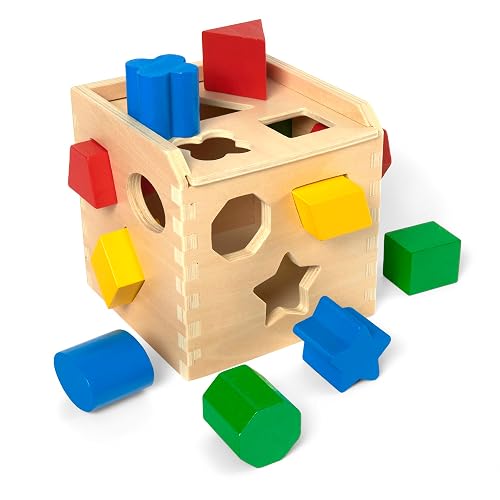
Shape sorters, wooden blocks and simple puzzles are classic tools for developing hand strength, grip and spatial reasoning. This set suits toddlers aged 2 to 3 who are moving from banging and stacking toward matching shapes to holes.
Key specs
- Includes wooden blocks, a puzzle and a shape sorter, per the listing
- Marketed for ages 1 to 3 as a Montessori-style set
- Unisex design suitable for boys and girls
Pros
- Several activity types in one set
- Builds grip strength and shape recognition
- No batteries or screens needed
Cons
- Small pieces need supervision for toddlers who still mouth objects
- Shape sorters can frustrate children who aren’t ready for matching yet
Bottom line: A good pick for parents who want open-ended, hands-on play that grows with the child.
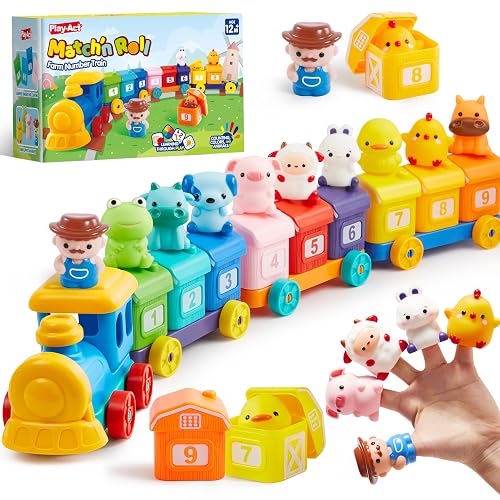
Play-Act Learning Toys for 1 2 3 Years Old, Counting, Matching & Sorting Montessori Learning Farm Train
Play-Act Learning Toys for 1 2 3 Years Old, Counting, Matching & Sorting Montessori Learning Farm Train Including 9 Farm Animals, Birthday Gift for Baby Boys Girls
Best for: Pretend play and counting.
Animal figures paired with a train give toddlers a story-based way to practice counting, matching and sorting. It fits children who already enjoy pretend play and are beginning to name animals and sounds.
Key specs
- Includes nine farm animals, per the listing
- Train component for matching and sorting activities
- Marketed for ages 1 to 3
Pros
- Combines counting with imaginative play
- Animal names support early vocabulary
- Easy to take apart and sort into a container
Cons
- Small animals are a choking hazard for children under 3 who mouth objects
- Pieces can scatter quickly on hard floors
Bottom line: Best for families who want a play-based counting toy and can keep small pieces away from very young mouths.
hahaland 5-Language Learning Tablet Toy for Toddler 1-3 with Speech Therapy
New Version Educational Toys with Sounds & Music, Montessori Early Development Birthday Gifts for Boys Girls Baby Ages 1 2 3 hahaland 5-Language Learning Tablet Toy for Toddler 1-3 with Speech Therapy
Best for: Early language exposure.
This tablet-style toy offers sounds, music and phrases in several languages. It suits households that want a child exposed to more than one language or a toy that reinforces listening and repetition.
Key specs
- Five-language content, per the listing title
- Sound and music features for ages 1 to 3
- Marketed with speech therapy framing
Pros
- Multilingual exposure in one device
- Audio reinforcement for listening skills
- Good for car trips and quiet time
Cons
- Screen-style toys can crowd out hands-on play if overused
- Speech therapy claims should not replace advice from a licensed speech-language pathologist
Bottom line: A good fit for families focused on early language, as long as screen-style play stays in balance.
Buying Guide
Match the toy to the developmental stage
A toy for a 12-month-old and one for a 3-year-old should be very different. Toddlers under 18 months benefit from simple cause-and-effect toys, while children aged 2 to 3 usually enjoy sorting, pretend play and early word games. Check the manufacturer’s age range, but also watch what your child actually does with a toy.
Good picks for this: Montessori Sensory Toys, Toddler Toy 2-3; Montessori Language Learning Toys with 224 Words
Look for open-ended play
Toys that can be used more than one way tend to hold a toddler’s interest longer. Blocks, shape sorters and farm figures can each be stacked, sorted, named or used in pretend stories. Single-function gadgets often lose appeal within weeks.
Good picks for this: Play-Act Learning Toys for 1 2 3 Years Old; Montessori Sensory Toys, Toddler Toy 2-3
Check size and choking risk
Any piece that fits through a toilet paper tube is a choking hazard for children under 3. Check that small parts are secured or large enough, and inspect toys regularly for loose pieces. The U.S. Consumer Product Safety Commission publishes guidance on toy safety and small-parts requirements.
Good picks for this: VTech Little CEO Learning Desk Toddler Activity Center; Montessori Sensory Toys, Toddler Toy 2-3
Consider battery and electronic use
Electronic toys offer sound and light feedback, but they need batteries and can be louder than a household can comfortably handle. Look for an easy battery compartment and a volume control if you choose an electronic model. Balance electronic toys with hands-on play.
Good picks for this: VTech Little CEO Learning Desk Toddler Activity Center; hahaland 5-Language Learning Tablet Toy for Toddler 1-3
Think about space and storage
A large activity center can dominate a small living room. Measure the floor area you have, and consider toys that store in a bin or basket. Compact sets are easier to rotate, which keeps play fresh without buying more.
Good picks for this: Montessori Language Learning Toys with 224 Words; VTech Little CEO Learning Desk Toddler Activity Center
Check durability and materials
Toddlers chew, drop and stack. Wooden toys and sturdy plastics generally handle rough use better than thin cardboard or fabric. Check for smooth edges, and make sure paint and finishes are labeled non-toxic. The American Academy of Pediatrics offers general guidance on choosing safe toys for young children.
Good picks for this: Montessori Sensory Toys, Toddler Toy 2-3; Play-Act Learning Toys for 1 2 3 Years Old
Plan for easy cleaning
Toddler toys pick up saliva, food and dirt quickly. Plastic and sealed wood wipe clean with a damp cloth and mild soap. Avoid soaking electronic toys, and check the manufacturer’s cleaning instructions before using disinfectant.
Good picks for this: Play-Act Learning Toys for 1 2 3 Years Old; Montessori Language Learning Toys with 224 Words
FAQ
What age are learning toys for toddler best suited to?
Most learning toys are marketed for ages 1 to 3. Simple stacking and sound toys suit the younger end, while sorting, counting and pretend-play sets work better from around age 2.
Are electronic learning toys better than wooden ones?
Neither is automatically better. Electronic toys provide sound and light feedback, while wooden toys encourage open-ended hands-on play. Many families use a mix, keeping screen-style play to short, limited sessions.
How many learning toys does a toddler need?
A small rotating set is usually more effective than a large collection. Offering four to six toys at a time and swapping them every week or two can keep toddlers engaged.
Do learning toys actually help toddler development?
Toys support learning most when an adult talks, names objects and plays alongside the child. Research on early childhood generally points to interaction and repeated practice as the drivers of skill growth, rather than any single product.
How do I keep small toy parts safe?
Use a small-parts tube or check that every piece is larger than the tube’s opening. Inspect toys weekly for loose pieces, and store small items out of reach. Discard any toy with broken parts.
When should I check with a professional about toddler development?
If your toddler is not using words, pointing or following simple instructions by the expected ages, talk with your pediatrician. A licensed speech-language pathologist can assess language development. Toys can support learning but do not replace professional evaluation.
Conclusion
For most families, the Montessori Language Learning Toys with 224 Words is a strong starting point because it is portable and focused on vocabulary. Families short on floor space may prefer the VTech Little CEO Learning Desk, while the Montessori Sensory Toys set suits hands-on sorting and fine motor practice. The Play-Act farm and train set works for counting and pretend play, and the hahaland tablet fits households focused on early multilingual exposure. Match the pick to your child’s stage, your space and your comfort with electronic toys, and keep small parts out of reach of younger toddlers.
Sources
- Toy safety standards, small-parts rules and recall information for young children (cpsc.gov)
- General guidance on early childhood development, screen time and safe toy selection (aap.org)
- Information on speech and language development milestones for toddlers
Related reading
- Top 7 Early Learning Ride On Toys for Toddlers Compared (2026)
- Top 7 Early Learning Montessori Toys for Toddlers and Preschoolers
- Top 7 Chinese Language Learning Toys with Audio for Toddlers (2026)
About Colin Foster
Colin Foster is part of our editorial team and reviews and edits our early learning at home guides, checking product details against manufacturer specifications and owner feedback.