By Colin Foster
Updated November 2026
The learning experience toys category covers everything from activity centers to interactive play sets, and the best ones build skills your child actually uses. In this guide, you’ll learn how to judge a toy’s learning value, match it to your child’s stage, and set it up so it gets used. By the end, you’ll have a simple process for choosing and rotating toys at home.
Step 1: Match the Toy to Your Child’s Developmental Stage
A toy that teaches too little bores a child, and one that teaches too much frustrates them. Look for toys labeled for a specific age range, then check whether the activities let your child work at a level just above what they can already do. A two-year-old who stacks three blocks confidently is ready for a shape sorter with more pieces. A four-year-old who names colors but not letters may benefit from a toy that pairs both.
Shopping for one? See our guide: See and Spell Learning Toys Review: Melissa & Doug Wooden Set Pros and Cons.
Age labels are a starting point, not a rule. Watch your child play for a few minutes and note what they do without help.
Step 2: Check for Open-Ended Learning
Toys that do everything for the child, such as a device that sings and lights up when a button is pressed, teach cause and effect but little else. Toys that invite the child to make choices teach problem solving, language, and creativity. Ask yourself:
- Can my child use this toy in more than one way?
- Does the toy need my child to think, sort, build, or talk?
- Will it still be interesting after two weeks?
Step 3: Confirm the Skills Each Toy Targets
Most learning experience toys target one or more of five areas: fine motor skills, language, early math, sensory exploration, and social play. Pick two or three areas your child needs practice in, rather than buying for every category at once. The table below shows how to connect a skill to what to look for.
| Skill area | What to look for | Example activity |
|---|---|---|
| Fine motor | Pegs, pieces that snap or twist | Threading large beads |
| Language | Names, sounds, or story prompts | Naming animals on a puzzle |
| Early math | Counting, sorting, patterns | Sorting objects by color or size |
| Social play | Pieces for two or more players | Taking turns with a board game |
Step 4: Set Up the Toys So They Get Used
A toy in a closed bin is rarely used. Set up a small learning station with two or three toys at child height, and rotate them every week or so. Remove the rest and store them out of sight. This keeps each toy feeling new and makes it easier for your child to focus.
Sit with your child for the first few minutes of a new toy. Model one or two actions, then step back and let them explore. Your role is to ask questions like “What do you think goes next?” rather than to show the one correct way.
Quick setup checklist
- Choose two or three toys matched to your child’s current skill level.
- Clear a low shelf or small table for the learning station.
- Remove missing-piece hazards and check for small parts if children under three are present.
- Sit nearby for the first session and model one activity.
- Rotate toys weekly and log which ones held attention.
Common Mistakes to Avoid
- Buying by brand name alone instead of checking the skills the toy builds.
- Choosing toys that are too advanced, then giving up on them.
- Keeping every toy out at once, which overwhelms young children.
- Taking over the play and doing the activity for your child.
- Assuming screen-based toys teach more than hands-on ones.
Recommended Gear
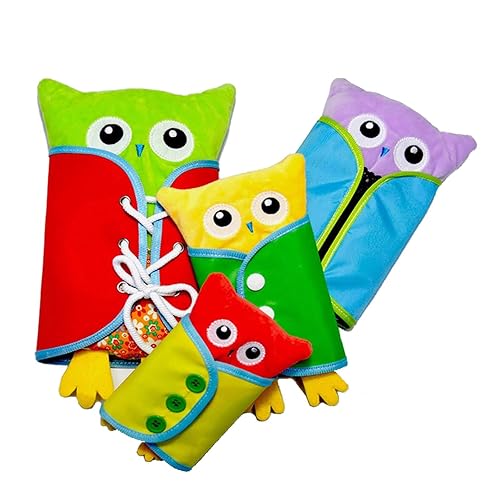
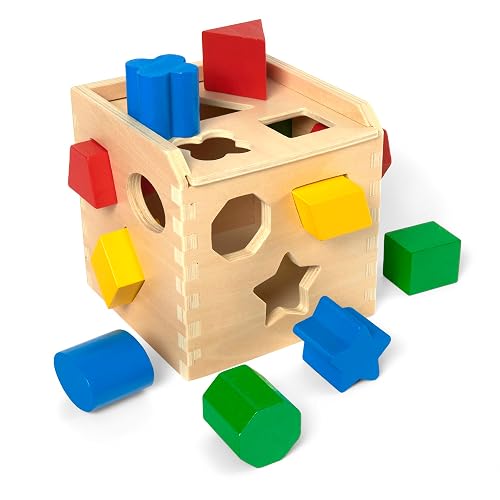
A low, sturdy shelf keeps rotating toys visible and within reach, which makes the learning station easy to maintain. View on Amazon is a classic open-ended option for building shape recognition and fine motor control. View on Amazon encourages sorting, size comparison, and hand-eye coordination for toddlers.
If you want more examples to compare, see Top Preschool Learning Toys: 7 Best Picks Compared (2026) and Top 5 Best Electronic Learning Toys Compared for Preschoolers. For language-focused picks, Toys for Learning Letters: How to Choose and Use the Best Ones at Home walks through alphabet activities in detail.
FAQ
How many learning toys does a child need at once?
Two or three is usually enough for a young child to explore deeply. Too many choices can lead to scattered play and less focus.
Are electronic learning toys worse than wooden ones?
Not necessarily, but open-ended toys tend to give children more chances to think and create. Electronic toys work best when they encourage active responses rather than passive watching.
How do I know if a toy is too hard for my child?
If your child becomes frustrated within a few minutes and does not try again, the toy is probably too advanced. Try a simpler version or demonstrate one step before letting them continue.
Conclusion
Choosing the right learning experience toys comes down to matching the toy to your child’s stage, checking for open-ended play, and confirming the skills it builds. Set up a small rotating station and join in at first, then step back. With these habits, your child will get more learning from fewer, better toys.
Related reading
- VTech Learning Walker Toys R Us: How to Choose and Set Up the Right Walker
- VTech Learning Toys for 2 Year Olds: How to Choose the Right Ones
- VTech Electronic Learning Toys: How to Choose the Right Ones for Your Child
- Toys for Learning Disabilities: 7 Best Picks Compared for Home Learning (2026)
Ready to choose one?
About Colin Foster
Colin Foster is part of our editorial team and reviews and edits our early learning at home guides, checking product details against manufacturer specifications and owner feedback.