By Colin Foster
Updated November 2026
Parents looking for toys for learning phonics usually want one thing: a way for a child to connect letters with the sounds they make, without turning every afternoon into a worksheet. The right toy can do that quietly, through repetition, sound feedback and short games a young reader will actually come back to. This guide compares six popular phonics toys across the criteria that matter most at home: how the toy teaches sounds, the age range it fits, how much adult help it needs, how durable it is, and whether it works without a screen. The picks range from electronic reading systems to a wooden puzzle and a sorting activity, so you can match the toy to your child’s stage.
Our top picks at a glance
- 1
 TOP CHOICEBest overallPhonics Learning Toy for Preschool Kids – Talking Flash Cards with SouView on Amazon
- 2
 TOP CHOICEBest for short vowel practiceMontessori Phonics Skillmatics Phonics Sorter – Vowel Sorting Preschool ActivityView on Amazon
- 3
 TOP CHOICEBest for independent readingPhonics Learning Toy with Reader Dog – Tap-to-Read Audio, 5 Learning Levels, 148 PagesView on Amazon
- 4
 Best for toddlersMelissa & Doug Ms. Rachel Wooden Phonics Alphabet Sound PuzzleView on Amazon
- 5
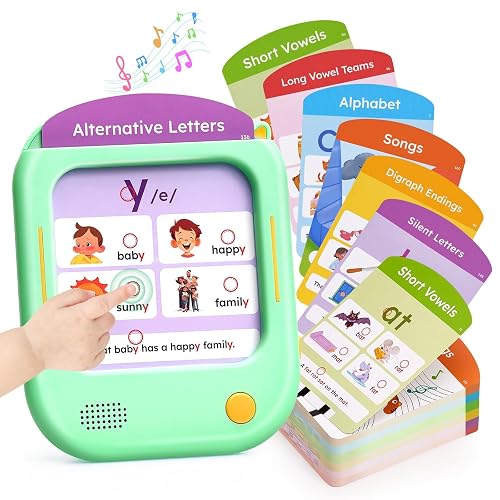 Best screen-free tabletJoyCat Phonics Learning Tablet – Learn to Read with 5 Level ProgressView on Amazon
- 6
 Best for playtime with lettersElmo's Learn & Go School Bus Interactive Toy with LightsView on Amazon
Our Top Picks
The comparison below lists each product’s main use and standout feature. The detailed sections that follow explain who each toy suits and where it falls short.
Quick Comparison
| Product | Best for | Key feature |
|---|---|---|
| Phonics Learning Toy for Preschool Kids – Talking Flash Cards | Preschoolers learning sounds and simple words | Talking flash cards with a sound machine |
| Montessori Phonics Skillmatics Phonics Sorter | Practicing short vowel sounds | Hands-on vowel sorting activity |
| Phonics Learning Toy with Reader Dog | Early readers who want to work alone | Tap-to-read audio with 5 learning levels |
| Melissa & Doug Ms. Rachel Wooden Phonics Alphabet Sound Puzzle | Toddlers starting letter-sound links | Light-activated sound effects in a wooden puzzle |
| JoyCat Phonics Learning Tablet | Children who respond to a handheld device | Screen-free reading tablet with 5 levels |
| Elmo’s Learn & Go School Bus | Young children who like character play | Interactive lights and sounds across letters |
Phonics Learning Toy for Preschool Kids – Talking Flash Cards with Sound Machine, Word Blending & Math Games
Phonics Learning Toy for Preschool Kids – Talking Flash Cards with Sound Machine, Word Blending & Math Games – Educational Reading & Counting Activity Set 4-8
Best for: Overall phonics practice for preschoolers and early kindergartners
This set suits families who want one toy that covers letter sounds, simple blending and a bit of counting. Children press a card and hear the sound or word, which gives a clear model for matching print to speech.
Key specs
- Listing age range: 4–8 years
- Talking flash card format with a built-in sound machine
- Includes word blending and math game modes
Pros
- Covers phonics and counting in one set
- Sound feedback helps children check their own pronunciation
- Easy for a child to use with little adult setup
Cons
- Youngest children may need help switching between game modes
- Math features are a side use if your focus is reading only
Bottom line: A strong first pick for a parent who wants a flexible, all-around phonics set for a child aged roughly four to eight.
Montessori Phonics Skillmatics Phonics Sorter – Vowel Sorting Preschool Activity
Montessori Phonics, Short Vowel Sounds, Phonemic Awareness, Early Reading, Pre-K to Grade 1, Christmas Gift Ages 4, 5, 6, 7 Skillmatics Phonics Sorter – Vowel Sorting Preschool Activity, Learning Toy
Best for: Practicing short vowel sounds through sorting
This activity fits children moving from single letter sounds toward reading simple words. Sorting by vowel sound asks the child to listen and decide, which builds phonemic awareness more actively than flipping cards.
Key specs
- Listing age range: 4–7 years
- Focus on short vowel sounds and phonemic awareness
- Designed for pre-K through Grade 1 skills
Pros
- Hands-on sorting keeps children physically engaged
- Targets vowel sounds, which many early readers find tricky
- Works well in a Montessori-style learning area
Cons
- Narrower focus than an all-in-one reading system
- Requires an adult to introduce the sorting rules at first
Bottom line: Best for a child who already knows some letter sounds and needs focused vowel practice.
Phonics Learning Toy with Reader Dog – Tap-to-Read Audio, 5 Learning Levels, 148 Pages
Tap-to-Read Audio, Bottom Reading Sensor, 5 Learning Levels, USB-C Rechargeable, 3 Volume Settings, Card Rings Included Phonics Learning Toy with Reader Dog, 148 Pages, 90 Stickers, Ages 3-8
Best for: Early readers who want to work independently
This tap-to-read system is built for a child who can start to work alone. Tapping a bottom sensor plays the word or sound, and the levels step up as skills grow. Owners often report that children repeat favorite pages without much prompting.
Key specs
- Listing age range: 3–8 years
- 5 learning levels, 148 pages, 90 stickers
- USB-C rechargeable, 3 volume settings
Pros
- Five levels allow a clear path from sounds to reading
- Adjustable volume suits shared spaces
- Rechargeable by USB-C, so no battery swaps
Cons
- Many pages can feel like a lot for a beginner
- Sticker and card parts need to be kept together
Bottom line: A good choice for a child ready to move from sounds into full reading, especially one who likes working solo.
Melissa & Doug Ms. Rachel Wooden Phonics Alphabet Sound Puzzle
Melissa & Doug® Ms. Rachel™ Wooden Phonics Alphabet Sound Puzzle with Light-Activated Sound Effects, 26-Piece Toddler Toys for Boys and Girls Ages 2+ Years – FSC Certified
Best for: Toddlers starting to link letters with sounds
A wooden puzzle with sound effects suits a toddler who learns through touch and play. Matching each piece to its letter and sound builds the first connection between shape and sound before any blending begins.
Key specs
- 26 pieces, one per letter of the alphabet
- Light-activated sound effects
- Listing age range: 2 years and up; FSC certified
Pros
- Good starter for children under four
- Wooden pieces are sturdy for active handling
- Sound effects give immediate feedback on each letter
Cons
- Covers letter sounds only, not blending or reading
- Light-activated sounds may need adult help to reset
Bottom line: Ideal as a first phonics toy for a toddler, with a plan to add reading-focused products later.
JoyCat Phonics Learning Tablet – Learn to Read with 5 Level Progress
Learn to Read with 5 Level Progress Phonic Educational Toy, Screen-Free Learning Tablet Birthday Gift for Boys Girls Ages 3-8 JoyCat Phonics Learning Tablet, 156 Pages Talking Flash Cards
Best for: A screen-free, tablet-style reading device
This handheld device gives the feel of a learning tablet without a display. It suits a child who enjoys pressing buttons and following a set path through levels, and it can replace some screen time.
Key specs
- Listing age range: 3–8 years
- 5 level progression, 156 pages of talking flash cards
- Screen-free design
Pros
- No screen, which suits families limiting device time
- Level progression tracks growth over several months
- Talking cards reinforce sound-to-letter links
Cons
- Button-based play can get repetitive over time
- Less hands-on than sorting or puzzle activities
Bottom line: Good for a child who likes a device-style toy but whose family prefers screen-free options.
Elmo’s Learn & Go School Bus Interactive Toy with Lights
Sounds, Toddlers Learn the Alphabet, Phonics, Numbers, Music, Holiday Stocking Stuffers, Gifts, Presents, Sesame Street Elmo's Learn & Go School Bus Interactive Toy with Lights
Best for: Playful letter and sound exposure for young children
This character-based vehicle brings letters, numbers and music into imaginative play. It works best as an introduction to letter sounds for a child who is not yet ready for structured reading practice.
Key specs
- Interactive lights and sounds
- Covers letters, numbers and music
- Character-themed design from Sesame Street
Pros
- Strong appeal for children who love the characters
- Combines letters with counting and music
- Easy for very young children to operate
Cons
- Phonics is one part of a broader play set
- Sounds and lights can be loud in quiet rooms
Bottom line: A fun pick for a younger child who needs a gentle start with letters inside pretend play.
Buying Guide
Use the factors below to narrow your choice before you buy. Each one affects how much a phonics toy will help a particular child.
Match the toy to your child’s current stage
Start with what your child already knows. A child who cannot yet name letters will benefit from letter-sound puzzles, while a child who knows most sounds may be ready for blending and reading levels. Check the age range in the listing, but treat it as a rough guide.
Good picks for this: Melissa & Doug Ms. Rachel Wooden Phonics Alphabet Sound Puzzle, Phonics Learning Toy with Reader Dog
Look for audio feedback
Sound feedback lets a child hear the correct pronunciation right away. This matters most for vowels and blends, where a child may guess wrong without a model. Adjustable volume is useful in shared rooms.
Good picks for this: Phonics Learning Toy for Preschool Kids, JoyCat Phonics Learning Tablet
Consider whether you want a screen
Many families prefer screen-free phonics practice, especially for younger children. Screen-free tablet-style devices and wooden or card-based sets offer sound feedback without a display. Decide this before you compare features.
Good picks for this: JoyCat Phonics Learning Tablet, Montessori Phonics Skillmatics Phonics Sorter
Check the number of levels and pages
Systems with several levels give a clear path to follow over months. Count the pages or cards and ask whether your child will use them all. A very large set can overwhelm a beginner, so a shorter set may work better early on.
Good picks for this: Phonics Learning Toy with Reader Dog, Phonics Learning Toy for Preschool Kids
Assess durability and materials
Toddlers handle toys roughly. Wooden pieces tend to hold up to daily use, while thin cards may bend or tear. Look for solid construction, and check whether small parts, stickers or cards are easy to lose. Manufacturers typically list safe materials and age guidance, so read those notes before purchase.
Good picks for this: Melissa & Doug Ms. Rachel Wooden Phonics Alphabet Sound Puzzle, Elmo’s Learn & Go School Bus
Plan for adult involvement
Some toys run on their own, while others work best when an adult introduces the rules. Be realistic about how much time you can give. A sorting activity needs a short demonstration, while a tap-to-read system can often be handed to the child directly.
Good picks for this: Phonics Learning Toy with Reader Dog, Montessori Phonics Skillmatics Phonics Sorter
Care and cleaning
Wipe wooden and plastic surfaces with a damp cloth, and keep electronics dry. Store cards and small pieces in a container so they stay together. Charging and battery guidance should come from the manufacturer, so follow those instructions for any rechargeable device.
Good picks for this: JoyCat Phonics Learning Tablet, Phonics Learning Toy with Reader Dog
FAQ
At what age should a child start phonics toys?
Many children begin with letter-sound toys around ages two to three, when they show interest in letters and sounds. Structured blending and reading toys usually fit children around four to eight. Start with the toy that matches what your child already knows, not only the age on the box.
Do phonics toys replace reading with a parent?
No. Phonics toys work best as practice between shared reading sessions. A parent reading aloud, pointing to words and talking about sounds adds context that a toy cannot provide. Use toys to reinforce skills, not to replace conversation.
How long should a phonics session last?
For young children, short sessions of about five to ten minutes often work better than long blocks. Stop while the child is still engaged. Frequent short sessions usually help more than one long session that ends in frustration.
Are electronic phonics toys better than printed cards?
Neither is automatically better. Audio feedback helps children hear correct sounds, which is useful, but hands-on activities such as sorting and puzzles build different skills. Many families combine both types across the year.
What is the difference between phonics and phonemic awareness?
Phonemic awareness is the ability to hear and manipulate sounds in spoken words. Phonics connects those sounds to written letters. Toys that involve listening and sorting often support phonemic awareness, while flash cards and tap-to-read systems focus more on letter-sound links.
How do I know if a phonics toy is working?
Look for steady progress in naming letters, saying sounds and blending simple words over several weeks. If your child avoids the toy or seems frustrated, try an easier level or a different type of activity. For concerns about reading development, a pediatrician or reading specialist can offer a professional assessment.
Conclusion
For an all-around preschool set, the Phonics Learning Toy for Preschool Kids with talking flash cards covers sounds, blending and simple games. A child who already knows letter sounds and needs focused vowel practice will get more from the Montessori Phonics Skillmatics Phonics Sorter. The tap-to-read Reader Dog system suits independent readers, while the Melissa & Doug wooden puzzle is a practical first choice for toddlers. Families who prefer no screen may like the JoyCat tablet, and the Elmo’s Learn & Go School Bus fits younger children who learn through character play. Match the toy to your child’s current stage, and you will get the most value from any of these six picks.
Sources
- Research summaries on early reading development and how children learn letter-sound relationships (nichd.nih.gov)
- Toy safety guidance, age labeling and recall information for children's products (cpsc.gov)
- Resources on early literacy instruction and reading skill development for young learners (ed.gov)
Related reading
- 6 Best Phonics Learning Toys for Preschool Readers (2026)
- 6 Best Jolly Phonics Learning Toys for Preschool Readers (2026)
- Wooden vs Plastic Early Learning Construction Toys: Which Is Better? (2026)
About Colin Foster
Colin Foster is part of our editorial team and reviews and edits our early learning at home guides, checking product details against manufacturer specifications and owner feedback.