By Colin Foster
Updated November 2026
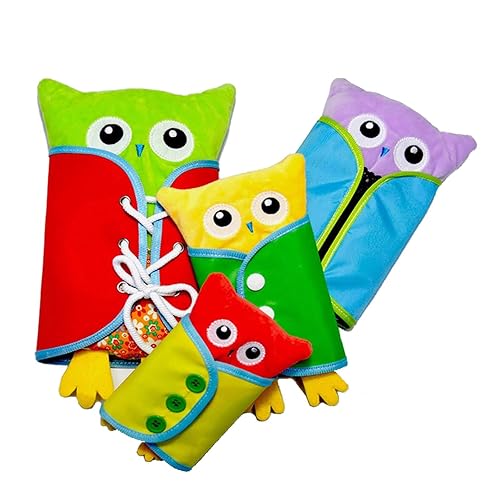
Early learning center toys are designed to build core skills like problem solving, fine motor control, language and social play. This guide shows you how to pick early learning center toys that match your child’s age and stage, how to set them up at home, and how to avoid the mistakes that leave toys sitting unused. By the end, you will have a short list of criteria to use at any store or online shop.
Step 1: Match the Toy to Your Child’s Current Stage
Start with age, but don’t stop there. Two children the same age can be at very different stages, so look at what your child already does well and what they are reaching for next. A toy that is one step ahead is ideal. A toy that is three steps ahead usually ends up in the closet.
Shopping for one? See our guide: 5 Best 3 Month Old Learning Toys for Early Play (2026).
- Infants (0–12 months): high-contrast images, rattles, soft blocks and textured rings that encourage grasping and tracking.
- Toddlers (12–24 months): stacking cups, shape sorters, push toys and simple puzzles with large knobs.
- Preschoolers (3–5 years): building sets, pretend play props, early letter and number games, and art supplies.
For more age-specific picks, see 7 Best Early Learning Toys for Infants: Our Picks Compared (2026) and Top Preschool Learning Toys: 7 Best Picks Compared (2026).
Step 2: Identify the Skill You Want to Build
Pick one or two skill areas before you shop. Early learning toys generally fall into a few categories, and naming the category keeps your choices focused.
| Skill area | What to look for | Example activities |
|---|---|---|
| Fine motor | Pegs, beads, small blocks, lacing | Threading large beads, placing pegs in a board |
| Language | Board books, picture cards, talking toys | Naming objects during play, reading aloud |
| Cause and effect | Buttons, pop-up toys, shape sorters | Pressing a button and waiting for the response |
| Pretend play | Kitchen sets, dolls, dress-up pieces | Role-playing meals or bedtime routines |
Step 3: Check Safety, Durability and Ease of Cleaning
Early learning toys get mouthed, dropped and squeezed, so physical quality matters as much as educational value. Check the manufacturer’s age labeling and any small-parts warning, and inspect toys for loose pieces, sharp edges and seams that could pinch. Choose toys that wipe clean, since sticky fingers and drool are constant. Consult a pediatrician if you have questions about choking hazards for your child’s age.
Step 4: Set Up a Simple Rotation at Home
Too many toys out at once can reduce focus. Keep about six to eight learning toys accessible and store the rest in a closed bin. Swap them every two to three weeks. This keeps toys feeling new and gives you a natural way to introduce the next skill. If you want a structured weekly plan, our printable lesson resources show how to pair toys with short, daily activities.
- Sort toys into groups by skill area.
- Store half in a closed bin.
- Rotate one group every two to three weeks.
- Sit with your child during each new toy for the first few minutes.
Recommended gear
- Shape sorter with a sturdy base: helps toddlers practice matching and problem solving; a stable base keeps it from sliding during play. View on Amazon
- Wooden stacking rings: build hand-eye coordination and sequencing, and wood is easy to wipe clean. View on Amazon
- Large-knob puzzle set: supports pincer grasp and shape recognition for children learning to fit pieces. View on Amazon
Common mistakes to avoid
- Buying for the age on the box instead of your child’s actual stage.
- Choosing electronic toys that do all the work and leave little room for your child to explore.
- Keeping every toy visible, which makes it harder for your child to settle on one activity.
- Skipping the small-parts check on toys meant for children under three.
- Expecting a single toy to teach a skill; repeated, playful practice is what builds it.
FAQ
How many early learning toys does a child need?
Most children do well with six to eight toys in rotation at a time. Quality and variety matter more than quantity.
Are electronic learning toys better than simple ones?
Not necessarily. Simple toys like blocks and shape sorters let children make choices and solve problems, which electronic toys often do for them.
When should I replace an early learning toy?
Replace toys that have cracked, lost small parts or developed sharp edges. Also retire toys your child has mastered, and move on to the next skill.
Conclusion
Choosing early learning center toys comes down to three checks: age and stage fit, a clear skill goal, and safe, durable construction. Rotate a small set at home and join your child in the first few minutes of play. With those habits, even a modest collection can support steady growth.
Related reading
- Top 7 Early Learning Ride On Toys for Toddlers Compared (2026)
- Minnie Mouse Learning Toys: 7 Picks That Build Early Skills
Ready to choose one?
About Colin Foster
Colin Foster is part of our editorial team and reviews and edits our early learning at home guides, checking product details against manufacturer specifications and owner feedback.