By Colin Foster
Updated November 2026
Motor skill learning toys help young children build the hand strength, finger control, and hand-eye coordination they need for writing, dressing, feeding themselves, and handling small objects. If you are shopping for motor skill learning toys, the right pick depends on your child’s age, how much supervision you can offer, and whether you want something that fits a tabletop, a play mat, or a small corner of a bedroom. The six toys below were selected by comparing manufacturer specifications, brand reputation, and patterns in owner feedback. We focused on toys that target fine motor skills such as grasping, pinching, sorting, stacking, and lacing, and that come with clear age guidance and safe, durable materials.
Our top picks at a glance
- 1
 TOP CHOICEBest overallFine Motor Skills Toys, Montessori Color Sorting Toddler ToysView on Amazon
- 2
 TOP CHOICEBest for peg and bead playWooden Peg Board Bead Game for ToddlersView on Amazon
- 3
 TOP CHOICEBest for counting and sortingCounting Animals Color Sorting Matching Games with Sorting BowlsView on Amazon
- 4
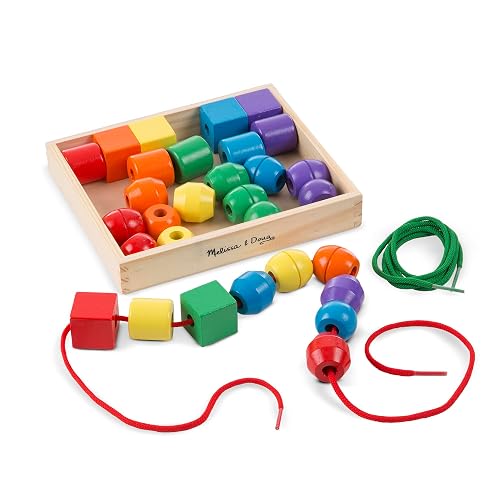 Best for stringing and lacingMelissa & Doug Primary Lacing Beads 33-Piece Montessori Toy SetView on Amazon
- 5
 Best for toddlers ages 1 to 3Montessori Sensory Toys, Toddler Toy 2-3View on Amazon
- 6
 Best budget pick for younger toddlersMontessori Toys, Toddler Toy 2-3, Wooden Blocks and Shape SorterView on Amazon
Our Top Picks
| Product | Best for | Key feature |
|---|---|---|
| Fine Motor Skills Toys, Montessori Color Sorting Toddler Toys | Overall fine motor practice | Color sorting with tweezer-style grasping |
| Wooden Peg Board Bead Game for Toddlers | Peg and bead placement | Rainbow stacking and peg board design |
| Counting Animals Color Sorting Matching Games | Counting and sorting | Animal figures with matching bowls |
| Melissa & Doug Primary Lacing Beads | Stringing and lacing practice | Painted wooden beads with laces and storage case |
| Montessori Sensory Toys, Toddler Toy 2-3 | Toddlers ages 1 to 3 | Wooden blocks, puzzle, and shape sorter combined |
| Montessori Toys, Toddler Toy 2-3 (wooden blocks and shape sorter) | Budget-conscious families with younger toddlers | Shape sorter and block play for early grasping |
Fine Motor Skills Toys, Montessori Color Sorting Toddler Toys
Fine Motor Skills Toys, Montessori Color Sorting Toddler Toys, Educational Matching Toddler Learning Toy, Shape Sorter Game Learning Resources Spike The Original Fine Motor Hedgehog A related read: Toddler Physical Development Lesson: 6 Steps to Build Motor Skills.
Best for: Overall fine motor practice for toddlers and preschoolers
This is a sorting-based toy that asks children to pick up small pieces and place them by color. It suits children who are working on the pincer grasp and want a structured, repeatable activity they can return to over several weeks.
Key specs
- Designed for fine motor and color recognition practice
- Montessori-style sorting format
- Suitable for toddler and early preschool use
Pros
- Builds pincer grasp and fingertip control
- Reinforces color recognition during play
- Easy to store and reset for repeated use
Cons
- Small pieces require close supervision with younger toddlers
- May be too simple for children already sorting confidently
Bottom line: A strong all-around choice for parents who want one toy that covers grasping, sorting, and color learning.
Wooden Peg Board Bead Game for Toddlers
Fine Motor Toys,Wooden Peg Board Bead Game for Toddlers – Rainbow Stacking, Color Sorting & Counting Toys | Fine Motor Skills Development | Math Learning Games for 3 4 5 Years Old
Best for: Peg and bead placement for children learning to hold and place small objects
This wooden peg board game lets children stack, place, and sort colored pieces into fixed holes. It is a good fit for children who enjoy building and need practice with hand control and visual tracking.
Key specs
- Wooden peg board with rainbow stacking pieces
- Intended for ages 3 to 5 according to the listing
- Covers color sorting and counting activities
Pros
- Strengthens wrist stability and precise placement
- Combines motor practice with early counting
- Wooden construction suits hands-on play
Cons
- Pegs can be easy to drop and need regular gathering
- Less suited to children under about 3 who are still developing grasp
Bottom line: Best for preschoolers who already grasp small objects and want a game that blends motor practice with math readiness.
Counting Animals Color Sorting Matching Games with Sorting Bowls
Counting Animals Color Sorting Matching Games with Sorting Bowls Montessori Sensory Early Educational Toys Learning Fine Motor Skill & Counting Math Toys Gift for 3 4 5 Year Old Boys Girls
Best for: Counting and sorting activities for children ages 3 to 5
This set pairs animal figures with sorting bowls, so children pick up each piece, identify it, and place it in the matching container. It works well for children who respond to themed, pretend-play sorting.
Key specs
- Animal figures with matching sorting bowls
- Listed for ages 3 to 5
- Focus on counting, color, and matching
Pros
- Practices grasping and releasing objects into containers
- Pairs fine motor work with counting and matching
- Animal theme keeps many children engaged
Cons
- Several small figures need to be tracked after play
- Bowls may take up noticeable shelf or table space
Bottom line: A good choice for preschoolers who enjoy pretend play and are ready to connect sorting with early math.
Melissa & Doug Primary Lacing Beads 33-Piece Montessori Toy Set
33 Pcs, 30 Painted Wooden Beads, 2 Laces, Storage Case, Fine Motor Sorting Play, Preschool Learning Toys for Kids, Ages 3+ Melissa & Doug Primary Lacing Beads 33-Piece Montessori Toy Set
Best for: Stringing and lacing practice for children learning bilateral hand coordination
Lacing beads ask children to thread, hold, and pull, which builds the control needed for later tasks like buttoning and tying. This set includes painted wooden beads, laces, and a storage case, making it easy to keep the pieces together.
Key specs
- 33 pieces including 30 painted wooden beads and 2 laces
- Includes a storage case
- Listed for ages 3 and up
Pros
- Strong practice for threading and bilateral coordination
- Storage case helps keep pieces from getting lost
- Wooden beads suit sustained hands-on play
Cons
- Threading can frustrate children who are not yet ready
- Small beads require supervision with younger children
Bottom line: A strong pick for preschoolers ready to practice stringing, pattern-making, and lacing skills.
Montessori Sensory Toys, Toddler Toy 2-3
Montessori Sensory Toys, Toddler Toy 2-3, Boy Girl Birthday Gifts, Wooden Block, Puzzle, Shape Sorter, Toddler Activities Montessori Toys for 1 2 3 Year Old Boy Girl, Toddler Learning Toys Gifts
Best for: Toddlers ages 1 to 3 who are building grasp and placement skills
This toy group combines wooden blocks, a puzzle, and a shape sorter. It suits toddlers who are moving from banging objects to placing them deliberately, and it offers several activities in one set.
Key specs
- Wooden blocks, puzzle, and shape sorter in one set
- Listed for toddlers ages 2 to 3, with use from age 1
- Sensory and Montessori-style design
Pros
- Multiple activities build grasp and placement skills
- Shape sorter supports early spatial reasoning
- Works well for gift-giving across toddler birthdays
Cons
- Several pieces can be lost without a storage plan
- Shape matching may be hard for children under about 18 months
Bottom line: Best for toddlers who are ready to explore several motor activities at once.
Montessori Toys, Toddler Toy 2-3, Wooden Blocks and Shape Sorter
Montessori Toys, Toddler Toy 2-3, Boys Girls Birthday Gifts, Wooden Blocks, Shape Sorter, Learning Toy, Toddler Activities Montessori Sensory Toys for 1 2 Year Old Boy Girl Gifts, Puzzle for Toddler
Best for: Budget-conscious families with younger toddlers who need simple, durable play
This wooden set focuses on blocks, a shape sorter, and a puzzle for children around 1 to 2 years old. Its simple design makes it a practical starter toy for building early grasp and placement.
Key specs
- Wooden blocks, shape sorter, and puzzle
- Listed for ages 1 to 2 with a toddler age range of 2 to 3
- Montessori-style open-ended design
Pros
- Simple pieces suit early grasping and stacking
- Wooden construction is generally durable for daily use
- Good starter option for a first motor skills toy
Cons
- Fewer activities than multi-activity sets
- Shape sorter may frustrate children still developing matching skills
Bottom line: A sensible starting point for families looking for a simple, wooden toy that suits younger toddlers.
Buying Guide
Match the toy to your child’s grasp stage
Children under about 2 usually rely on a whole-hand grasp, so chunky blocks and large shape sorters work best. Between ages 3 and 5, most children develop a pincer grasp with thumb and index finger, which is when peg boards, small beads, and sorting pieces become useful.
Good picks for this: Montessori Toys, Toddler Toy 2-3 and Montessori Sensory Toys, Toddler Toy 2-3
Check piece size and choking hazards
Any toy with small pieces should be checked against the age label and used with supervision for children who still mouth objects. The U.S. Consumer Product Safety Commission publishes guidance on small parts for children under 3 and is a useful reference when deciding whether a set is appropriate.
Good picks for this: Fine Motor Skills Toys, Montessori Color Sorting Toddler Toys and Counting Animals Color Sorting Matching Games
Look for activities that build more than one skill
Toys that combine grasping with sorting, counting, or matching give children several learning paths in one set. Multi-activity sets can keep children engaged longer, though they may also need more storage space.
Good picks for this: Wooden Peg Board Bead Game for Toddlers and Counting Animals Color Sorting Matching Games
Consider lacing and stringing for later self-care skills
Lacing beads and stringing activities build the bilateral coordination and sustained focus that later support buttoning, zipping, and tying shoes. These toys are most useful once a child can hold a bead steadily and pull a lace through it.
Good picks for this: Melissa & Doug Primary Lacing Beads 33-Piece Montessori Toy Set
Choose durable, easy-to-clean materials
Wooden toys tend to hold up well to daily handling and can be wiped with a damp cloth. Painted finishes should be checked for wear over time, since chipped paint can be a concern for children who mouth toys. Manufacturers typically specify cleaning guidance, so follow the label.
Good picks for this: Melissa & Doug Primary Lacing Beads 33-Piece Montessori Toy Set and Montessori Toys, Toddler Toy 2-3
Plan for storage and reset time
Sets with many small pieces are easier to manage when they come with a case or sorting tray. Reset time matters too: a toy that is quick to pack away tends to get used more often, especially in a shared living space.
Good picks for this: Melissa & Doug Primary Lacing Beads 33-Piece Montessori Toy Set and Counting Animals Color Sorting Matching Games
FAQ
What age should children start using motor skill learning toys?
Most children begin using simple motor skill toys around 12 months, starting with large blocks and shape sorters. Peg boards, lacing beads, and small sorting pieces are generally better suited to children around age 3 and up, once the pincer grasp is developing.
How do I know if a toy is developmentally appropriate?
Check the age range on the packaging and compare it with your child’s current grasp. If your child can pick up a piece with a whole hand but struggles to pinch, a toy requiring fine pincer control may be too advanced for now.
Are wooden motor skill toys better than plastic ones?
Wooden toys are often valued for durability and a satisfying weight, while plastic toys can be lighter and easier to wash. Both can build motor skills; what matters more is piece size, age labeling, and whether the toy holds your child’s interest.
How much time should my child spend with these toys each day?
Short, frequent sessions tend to work better than long ones for young children. Ten to fifteen minutes of focused play, with breaks, is a reasonable starting point for toddlers and preschoolers, adjusted to your child’s attention span.
What if my child loses interest quickly?
Rotate toys every few weeks and model the activity yourself, such as stacking a few pegs or stringing the first bead. Narrating what you are doing can also help children stay engaged.
When should I talk to a professional about fine motor delays?
If your child consistently struggles with grasping, pinching, or using both hands together compared with peers, speak with your pediatrician or an occupational therapist. These toys support development but are not a substitute for professional evaluation when a concern is present.
Conclusion
For most families, the best starting point is a toy that matches your child’s current grasp. Younger toddlers will do well with the Montessori Toys, Toddler Toy 2-3 or the Montessori Sensory Toys set. Preschoolers ready for pincer work may prefer the Fine Motor Skills Toys sorting set or the Wooden Peg Board Bead Game. Children who enjoy pretend play can get good value from the Counting Animals sorting games, while those ready for stringing will benefit from the Melissa & Doug lacing beads. Choose based on age, piece size, and how much supervision you can provide.
Sources
- Small parts guidance and choking hazard safety rules for children's toys (cpsc.gov)
- Developmental milestones and early motor skill benchmarks for young children (cdc.gov)
- Occupational therapy information on fine motor development in children
Related reading
- Toys for Learning Shapes: 6 Types That Build Early Geometry Skills (2026)
- Toys for Learning Numbers: 6 Ways to Build Early Math Skills at Home
- The Learning Journey Toys: How to Choose and Use Them for Early Skills
About Colin Foster
Colin Foster is part of our editorial team and reviews and edits our early learning at home guides, checking product details against manufacturer specifications and owner feedback.