 By Audrey Hayes
Updated November 2026
Choosing homeschool books for preschool can feel overwhelming, because most workbooks look alike on the outside and differ a great deal in what they actually teach. Parents of children ages three to five usually want a book that holds a child’s attention for short sessions, covers the core early skills of letters, numbers, shapes, colors and pre-writing, and does not require a lot of teacher prep. This guide compares seven widely sold preschool workbooks and activity books. Our selection criteria were specifications (page count, age range, skill coverage), brand reputation in early childhood publishing, and patterns that owners commonly mention in their feedback, such as page durability, print clarity and how easy the activities are to start without help.
Our top picks at a glance
- 1
 TOP CHOICEBest overallSchool Zone Big Preschool WorkbookView on Amazon
- 2
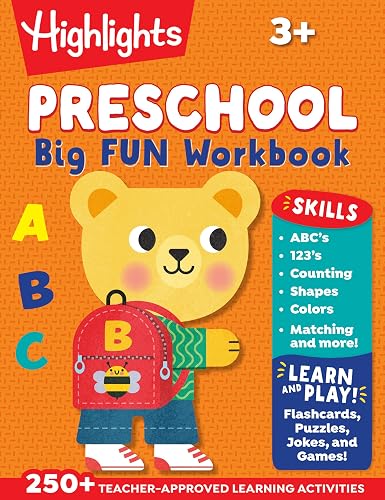 TOP CHOICEBest for busy days with a wide skill rangePreschool Big Fun WorkbookView on Amazon
- 3
 TOP CHOICEBest for large-print early readersScholastic Toddler Jumbo WorkbookView on Amazon
- 4
 Best for Montessori-style learning at homeThe XXL Montessori Preschool WorkbookView on Amazon
- 5
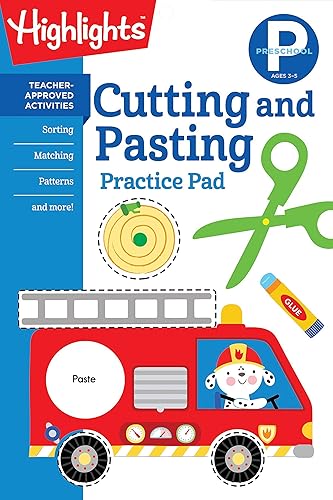 Best for scissor skillsPreschool Cutting and PastingView on Amazon
- 6
 Best for structured basic skillsCarson Dellosa Comprehensive Curriculum of Basic Skills Preschool WorkbookView on Amazon
- 7
 Best for the youngest preschoolersPlay Smart Big Preschool Workbook Ages 2-4View on Amazon
Our Top Picks
Quick Comparison
| Product | Best for | Key feature |
|---|---|---|
| School Zone Big Preschool Workbook | Overall preschool skill building | 320 spiral-bound pages covering pre-K skills |
| Preschool Big Fun Workbook | Busy days with a wide skill range | Over 250 practice games and puzzles |
| Scholastic Toddler Jumbo Workbook | Large-print early practice | Oversized pages with big, easy-to-trace prompts |
| The XXL Montessori Preschool Workbook | Montessori-inspired home learning | 200+ activities for ages 3 to 5 |
| Preschool Cutting and Pasting | Scissor skills and fine motor work | Dedicated cutting practice pages |
| Carson Dellosa Comprehensive Curriculum of Basic Skills Preschool Workbook | Structured basic skills | Alphabet, counting, phonics and pre-writing in one book |
| Play Smart Big Preschool Workbook Ages 2-4 | The youngest preschoolers | Over 250 activities pitched at ages 2 to 4 |
School Zone Big Preschool Workbook
School Zone Big Preschool Workbook: 320 Spiral-Bound Pages, Pre-K, Colors, Shapes, Numbers, Early Math, Alphabet, Pre-Writing, Phonics, Following Directions, Ages 3-5
Best for: Overall preschool skill building
This workbook suits parents who want one consolidated book covering the main pre-K areas. It is a good starting point for a child around age four who is ready for short, structured pages.
Key specs
- 320 spiral-bound pages
- Covers colors, shapes, numbers, early math, alphabet, pre-writing, phonics and following directions
- Designed for ages 3 to 5
Pros
- Broad skill coverage in one book
- Spiral binding lets the book lie flat on a table
- Page count gives many weeks of practice
Cons
- Pages are dense, which can overwhelm a child who is still building focus
- Requires some adult guidance to keep sessions on track
Bottom line: A strong first choice for parents who want a single, comprehensive preschool workbook for the whole year.
Preschool Big Fun Workbook
Preschool Big Fun Workbook: Preschool Learning Workbook with Over 250 Practice Games and Puzzles for PreK Math, Writing, Shapes and More Activities
Best for: Busy days with a wide skill range
This book fits families who want varied, game-like activities that keep a preschooler engaged across several subjects. It works well for mixed sessions when a child’s interest shifts quickly.
Key specs
- Over 250 practice games and puzzles
- Covers PreK math, writing, shapes and more
Pros
- Game format helps maintain interest
- Many short activities suit brief sessions
- Mixes subjects so one book covers several areas
Cons
- Some pages lean toward entertainment over depth in a single topic
- Less focused than a dedicated math or phonics book
Bottom line: A good pick for parents who want variety and fun, with a broad but lighter approach to each subject.
Scholastic Toddler Jumbo Workbook
Scholastic Toddler Jumbo Workbook
Best for: Large-print early practice
This book is aimed at the youngest learners and at children still developing fine motor control. The larger format makes tracing and coloring more comfortable for small hands.
Key specs
- Jumbo format with oversized pages
- Large prompts designed for early tracing and coloring
Pros
- Big pages are easier for small hands to handle
- Simple activities suit short attention spans
- Scholastic is a long-established children’s publisher
Cons
- Limited depth for children who are ready for more advanced skills
- Larger format takes up more shelf and table space
Bottom line: Best for toddlers and younger preschoolers who need big, simple pages before moving to more detailed workbooks.
The XXL Montessori Preschool Workbook
The XXL Montessori Preschool Workbook: 200+ Educational and Fun Activities for Kids Ages 3 to 5. Prepare for Kindergarten by Learning to Trace and Write, Count, Cut and Paste and More
Best for: Montessori-inspired home learning
Families who follow Montessori principles often want hands-on, self-directed work. This workbook offers many tracing, counting and cut-and-paste tasks that align with that approach.
Key specs
- 200+ educational activities
- Designed for ages 3 to 5
- Covers tracing, writing, counting and cutting and pasting, which are common kindergarten-readiness skills
Pros
- Large activity count supports long-term use
- Combines several kindergarten-readiness skills
- Works alongside other Montessori-style materials
Cons
- A workbook is still less open-ended than true Montessori materials
- Parents new to Montessori may need to adapt the activities
Bottom line: A practical choice for parents who want a Montessori-flavored workbook without buying a full set of classroom materials.
Preschool Cutting and Pasting
Preschool Cutting and Pasting: Scissor Skills Activity Book for Preschoolers, Practice Cutting Paper & More (Highlights Learn on the Go Practice Pads)
Best for: Scissor skills and fine motor work
This book is a focused choice for children who are learning to cut along lines and to glue or paste. Most preschool programs treat scissor skills as a separate, important area, and this title gives them dedicated practice.
Key specs
- Designed as a scissor skills activity book for preschoolers
- Part of the Highlights Learn on the Go practice pad line
Pros
- Narrow focus gives targeted cutting practice
- Portable pad format suits travel and car rides
- Builds fine motor control useful for writing
Cons
- Covers only one skill area, so it does not replace a full workbook
- Children may need safety-scissors supervision
Bottom line: Ideal as a supplement for a child who needs extra cutting and pasting practice alongside a main curriculum.
Carson Dellosa Comprehensive Curriculum of Basic Skills Preschool Workbook
Carson Dellosa Comprehensive Curriculum of Basic Skills Preschool Workbook, Toddler Activity Book With Alphabet, Colors, Shapes, Counting, Phonics, and Pre Writing Practice
Best for: Structured basic skills
Parents who like a clear, sequential path through early skills will find this workbook useful. It addresses alphabet, colors, shapes, counting, phonics and pre-writing in an organized layout.
Key specs
- Covers alphabet, colors, shapes, counting, phonics and pre-writing
- Toddler activity book format
Pros
- Organized sequence supports a planned routine
- Several core skill areas in one title
- Carson Dellosa is a widely used educational publisher
Cons
- Repetitive pages may bore some children
- Less playful than activity-based books
Bottom line: A solid pick for parents who want a predictable, skills-first workbook to anchor weekly lessons.
Play Smart Big Preschool Workbook Ages 2-4
Play Smart Big Preschool Workbook Ages 2-4: Over 250 Activities
Best for: The youngest preschoolers
This workbook is pitched at children from age two up to four, making it one of the few options in this list for toddlers. It suits parents who want to start early with simple, age-appropriate tasks.
Key specs
- Over 250 activities
- Designed for ages 2 to 4
Pros
- Age range starts earlier than most preschool workbooks
- Large activity count gives lots of variety
- Good for first exposure to tracing and matching
Cons
- Older preschoolers may outgrow the content quickly
- Very young children will need close adult support
Bottom line: Best for families starting very young, or for toddlers who need gentle introductory practice before a more advanced workbook.
Buying Guide
Age Range and Developmental Readiness
Check the age range printed on the cover and in the description. Books labeled for ages 2 to 4 suit toddlers and early preschoolers, while books for ages 3 to 5 assume a child can sit for longer and follow multi-step directions. A mismatch tends to produce frustration on one side or boredom on the other. If your child struggles to hold a crayon or trace a line, choose a book with bigger, simpler prompts first.
Good picks for this: Scholastic Toddler Jumbo Workbook, Play Smart Big Preschool Workbook Ages 2-4
Skill Coverage
Look at the table of contents or the product description and note which skills are covered: letters, phonics, numbers, shapes, colors, pre-writing, and following directions are the most common. A book that covers many areas is useful as a main workbook, while a narrow book works better as a supplement. Plan your own priorities before you buy so you do not pay for pages you will not use.
Good picks for this: School Zone Big Preschool Workbook, Carson Dellosa Comprehensive Curriculum of Basic Skills Preschool Workbook
Page Count and Session Length
Divide the page count by the number of school days you plan to use the book in a year. A 320-page book used for four short sessions a week will last many months, while a 60-page book may run out in a few weeks. Also consider session length: a preschooler often completes two to four pages in a sitting, so a book with many short activities suits brief, frequent lessons.
Good picks for this: School Zone Big Preschool Workbook, Preschool Big Fun Workbook
Format and Page Size
Standard workbook pages are typically around 8.5 by 11 inches, while jumbo formats are larger and easier for small hands. Spiral binding lets a book lie flat, which helps a young child work without the pages flipping shut. Pick a format that fits your table or your child’s workspace. Books that are too large can be awkward to store or carry.
Good picks for this: Scholastic Toddler Jumbo Workbook, School Zone Big Preschool Workbook
Activity Style and Engagement
Some preschoolers respond to traditional tracing and worksheets, while others need games, puzzles or hands-on tasks. Montessori-inspired books emphasize self-directed, tactile work, and game-style books add play to practice. Watch how your child reacts to a sample page if you can, and match the style to your child’s temperament rather than to what looks most impressive.
Good picks for this: The XXL Montessori Preschool Workbook, Preschool Big Fun Workbook
Fine Motor Support
Cutting, tracing and coloring all build the small muscles needed for writing. If your child is still developing these skills, look for books that include dedicated cutting and pasting pages, or pair a main workbook with a focused fine motor book. Start with simple straight-line cuts and build toward curves and shapes over several weeks.
Good picks for this: Preschool Cutting and Pasting, The XXL Montessori Preschool Workbook
Durability and Care
Preschoolers are hard on books. Owners often report that spiral-bound and thicker-paper workbooks hold up better than thin, loosely bound ones. Store books flat or upright on a shelf, keep sticky snacks away, and consider a small clip or folder to keep the current pages open. Replacing a damaged book is simpler than trying to repair one, so choose a durable binding from the start.
Good picks for this: School Zone Big Preschool Workbook, Carson Dellosa Comprehensive Curriculum of Basic Skills Preschool Workbook
FAQ
What age should I start using homeschool books for preschool?
Many families begin around age two or three with simple tracing, matching and picture activities, then move to fuller workbooks around age four. Each child develops at a different pace, so choose a book labeled for your child’s current abilities rather than their birthday alone.
How long should a preschool workbook session last?
Most preschoolers do best with sessions of about 10 to 20 minutes, depending on age and interest. Two to four pages in a sitting is a reasonable target for many children. Stop when your child shows signs of fatigue and return to the book later.
Do I need one workbook or several?
A single comprehensive workbook can cover most core skills, but many families combine one main book with a focused supplement, such as a cutting book or a phonics title. Starting with one book keeps things simple, and you can add a supplement later if you notice a specific gap.
Are workbooks enough for preschool at home?
Workbooks are one useful tool, but preschool learning also benefits from reading aloud, play, music, outdoor time and hands-on activities. Use workbooks for structured practice and fill the rest of the day with open-ended play and conversation.
How do I know if a workbook is too hard or too easy?
If your child completes most pages with little effort and asks for more, the book may be too easy. If they become frustrated, skip pages or refuse to continue, the book may be too advanced. Try a few sample pages with your child before committing to a full workbook.
Should I worry about cutting with scissors at this age?
Cutting is a normal preschool skill, and children usually learn it gradually. Use child-safe scissors, supervise closely, and start with simple straight-line cuts. If your child has difficulty with fine motor tasks in general, a pediatric occupational therapist can offer personalized guidance. Consult a professional if you have concerns about your child’s development.
Can these books be used with other curricula?
Yes. Many families use workbooks alongside other materials, such as read-alouds, math manipulatives or a complete homeschool program. Pick pages that match your current theme or weekly plan and skip what your child has already mastered.
Conclusion
Among these homeschool books for preschool, the School Zone Big Preschool Workbook is a sensible all-around choice for a child around ages three to five who needs broad coverage. The Preschool Big Fun Workbook suits families who want game-style variety. The Scholastic Toddler Jumbo Workbook and Play Smart Big Preschool Workbook Ages 2-4 fit the youngest learners. The XXL Montessori Preschool Workbook suits Montessori-leaning homes, Preschool Cutting and Pasting targets scissor skills, and the Carson Dellosa Comprehensive Curriculum of Basic Skills Preschool Workbook offers a structured, skills-first path. Match the book to your child’s age, interests and current needs, and consider pairing a main workbook with a focused supplement.
Sources
- Developmental milestones for young children, including the skills typical at ages 2 to 5 (cdc.gov)
- Federal guidance and resources on early learning and school readiness (ed.gov)
- Position statements and resources on developmentally appropriate practice for young children
Related reading
- When to Start Homeschool Preschool: A Guide for Parents
- Top 5 Homeschool Programs for Preschool Options Compared (2026)
- Schedule for Homeschool Preschool: A Flexible Daily Plan That Works
- Preschool Montessori Homeschool Curriculum: 10 Best Picks for Home Learning
- Preschool Homeschool Schedule Printable: A Step-by-Step Daily Routine Guide
- Preschool Homeschool Room Ideas: A Step-by-Step Setup Guide
About Audrey Hayes
Audrey Hayes is part of our editorial team and reviews and edits our early learning at home guides, checking product details against manufacturer specifications and owner feedback.