By Colin Foster
Updated November 2026
Electronic learning educational toys can add a useful layer of practice to a young child’s day, especially for counting, letters, early math and simple vocabulary. Parents usually want three things from them: content that matches the child’s age, controls that a small hand can operate, and enough variety that the toy stays interesting after the first week. The picks below were chosen by comparing manufacturer specifications, brand track record with early learning products, and the patterns owners tend to describe in their feedback. We did not test these toys ourselves, so treat the notes as a research summary rather than hands-on findings.
Our top picks at a glance
- 1
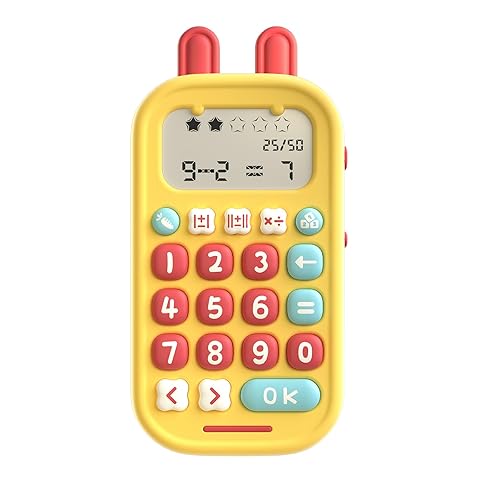 TOP CHOICEBest overallalilo Practicing Addition, Subtraction, Multiplication and Division Educational ToyView on Amazon
- 2
 Best for toddler letter and number playTalking ABC, 123s Music Poster – Electronic Alphabet Wall ChartView on Amazon
- 3
 Best for language and music-based learningTrilingual Learning Toy Tablet with Music and SoundView on Amazon
- 4
 Best for early elementary math drillsEducational Insights Math Whiz Electronic Math GamesView on Amazon
Our Top Picks
| Product | Best for | Key feature |
|---|---|---|
| Practicing Addition, Subtraction, Multiplication and Division (alilo Math Games) | Ages 5–12 and travel | 5 modes and 19 math games |
| Talking ABC, 123s Music Poster (Electronic Alphabet Wall Chart) | Toddlers ages 1–3 | Talking alphabet and number wall chart |
| Trilingual Learning Toy Tablet (Montessori Speech Musical Toy) | Babies and toddlers 12–36 months | Three-language music and sound tablet |
| Educational Insights Math Whiz Electronic Math Games | Ages 6–8 | Handheld addition, subtraction, multiplication and division games |
alilo Practicing Addition, Subtraction, Multiplication and Division Educational Toy
Practicing Addition, Subtraction, Multiplication and Division, Educational Toy with 5 Modes, 19 Math Games,50K Math Questions alilo Math Games for Kids Ages 5-12, Portable Math Toys for Travel
Best for: Overall math practice for school-age children who are building fact fluency
This handheld math trainer suits children roughly ages 5 to 12 who are working through basic operations and want repeated, self-paced practice away from a screen-heavy routine. Its portable size also makes it practical for car rides and trips.
Key specs
- Four operations: addition, subtraction, multiplication and division
- 5 modes and 19 games, as stated in the listing
- Large question bank described in the listing name
- Portable, travel-friendly design
Pros
- Covers a wide age range as children progress through operations
- Multiple game modes help keep repetition from feeling like a worksheet
- Easy to pack for travel or waiting rooms
Cons
- Math-only, so it does not support reading or other subjects
- Younger children may need an adult to explain the modes at first
Bottom line: A strong choice for a school-age child who needs focused math drills in a portable format.
Talking ABC, 123s Music Poster – Electronic Alphabet Wall Chart
Talking ABC, 123s, Music Poster, Interactive Educational Toddler Toy, Birthday Gifts for Age 1 2 3 4 5 Year Old Boys Girls Electronic Alphabet Wall Chart, Kids Learning Toys for Toddlers 1-3 – Blue
Best for: Toddler letter and number recognition in a shared space
This wall chart is aimed at toddlers roughly ages 1 to 3 who are starting to recognize letters, numbers and simple sounds. It works well in a playroom or bedroom where a child can return to it repeatedly.
Key specs
- Talking alphabet and number chart, as named in the listing
- Includes music and sound prompts
- Designed for wall mounting in a child’s room
Pros
- Introduces letters and numbers in a visual format children can revisit
- Audio feedback supports pressing and listening habits
- Takes up no floor space once mounted
Cons
- Limited to letters and numbers, with no broader curriculum
- Sound volume can be too loud for some households; check the controls before use
Bottom line: Best for parents who want an easy, wall-based way to reinforce the alphabet and counting at toddler height.
Trilingual Learning Toy Tablet with Music and Sound
Trilingual Learning Toy Tablet with Music & Sound, Montessori Speech Musical Therapy Toys, Gifts for Boy, Girl, Baby, Toddler, for Age 1, 2, 3 Year Old (12-18 Months)
Best for: Early language exposure and music-based play for babies and toddlers
This tablet-style toy is intended for babies and toddlers around 12 to 36 months. Its listing emphasizes three languages and musical sound, which suits families who want early vocabulary exposure through simple touch interactions.
Key specs
- Trilingual content, as stated in the listing
- Music and sound features
- Marketed for ages 12 to 36 months
Pros
- Music and speech prompts suit very young children
- Tablet format is familiar to toddlers who watch adults use devices
- Multilingual content can support households using more than one language
Cons
- Speech and music can be repetitive for parents over long sessions
- Best suited to the youngest end of the preschool range
Bottom line: A good fit for families of babies and young toddlers who want sound-based language play in a simple tablet format.
Educational Insights Math Whiz Electronic Math Games
Electronic Math Games for Kids Ages 6-8, Handheld Math Game, Addition and Subtraction Toys, Multiplication and Division Games Educational Insights Math Whiz
Best for: Math fact practice for children ages 6 to 8
This handheld game targets early elementary children who are working on addition, subtraction, multiplication and division. It is a good companion to classroom math when a child needs extra repetition at home.
Key specs
- Handheld, battery-style math game
- Covers addition, subtraction, multiplication and division
- Designed for ages 6 to 8 per the listing
Pros
- Clear focus on the four operations
- Portable and simple for independent play
- Brand known for educational games aimed at school-age learners
Cons
- Narrower age range than the alilo trainer, so it may not last as long
- Repetition may bore children who prefer open-ended play
Bottom line: Pick this if your child is in the 6-to-8 range and needs focused arithmetic practice in a handheld format.
Buying Guide
Age range and difficulty levels
Check the age range on the listing and compare it with what your child can actually do. A toy labeled for ages 1 to 3 will feel too simple for a child who already counts to 20, and a math game for ages 6 to 8 may frustrate a four-year-old. Look for toys that let you adjust difficulty or switch modes as skills grow.
Good picks for this: alilo Math Games for older children, Talking ABC wall chart for toddlers
Subject focus
Electronic toys tend to specialize. Some focus on letters, others on math, and some on language or music. Decide which skill you want to support first, then choose a toy that covers it well rather than one that tries to cover everything at a shallow level.
Good picks for this: Math Whiz for math facts, Trilingual Learning Toy Tablet for language
Controls and ease of use
Large, well-spaced buttons are easier for small hands. Check whether the toy has a clear on-off switch and whether the volume can be lowered. A toy that a child can operate alone reduces the amount of adult help needed during play.
Good picks for this: Trilingual Learning Toy Tablet, Talking ABC wall chart
Sound and volume
Many electronic toys play speech and music continuously. Look for volume control or a mute option, especially if the toy will be used in a shared room or during quiet time. Manufacturers often specify volume settings in the product manual; check it before purchase if you can.
Good picks for this: Talking ABC wall chart, Math Whiz handheld game
Portability and storage
If you plan to use the toy in the car, at restaurants or on trips, size and battery design matter. Handheld math games and small tablets are easy to slip into a bag, while wall-mounted charts stay in one place. Consider where the toy will live when it is not in use.
Good picks for this: alilo Math Games, Math Whiz handheld game
Durability and construction
Young children handle toys roughly, so look for sturdy casings and secure battery compartments. Check that battery covers require a tool or are otherwise hard to open, since loose batteries are a choking and ingestion hazard. The U.S. Consumer Product Safety Commission publishes toy safety guidance on battery and small-part hazards that is worth reading before you buy.
Good picks for this: Trilingual Learning Toy Tablet, Math Whiz handheld game
Batteries and maintenance
Find out what batteries the toy uses and how long they typically last. Keep spares on hand, and remove batteries if the toy will sit unused for a long period. Wipe electronic toys with a barely damp cloth and avoid submerging them.
Good picks for this: alilo Math Games, Talking ABC wall chart
FAQ
What age are electronic learning toys best for?
Most electronic learning toys list an age range on the package. Babies and toddlers do well with simple sound and touch toys, while preschoolers and early elementary children benefit from math and letter games that match their skill level.
Are electronic learning toys better than traditional toys?
Neither type is better across the board. Electronic toys can give quick audio feedback and repeat practice, while open-ended toys such as blocks encourage imaginative play. Many families use a mix of both.
How much screen time is appropriate for young children?
Guidance from pediatric and health organizations generally recommends limited screen time for young children and encourages co-viewing and interaction. Ask your child’s pediatrician for guidance tailored to your family.
Can electronic toys help with math skills?
They can give children extra practice with addition, subtraction, multiplication and division, especially when the toy adjusts difficulty. Hands-on activities like counting objects remain important alongside electronic practice.
How do I keep my child from getting bored with one toy?
Choose toys with multiple modes or games, rotate toys in and out of play, and sit with your child for a few minutes to model the activity. Short sessions are often more effective than long ones.
Are button batteries safe in these toys?
Button or coin cell batteries can be dangerous if swallowed. Make sure battery compartments are secure and tamper-resistant, and check the toy regularly. If a battery is swallowed, seek emergency medical care right away.
Conclusion
Each of these four electronic learning educational toys covers a different need. The alilo Math Games trainer is the most flexible option for school-age math practice. The Talking ABC wall chart suits toddlers learning letters and numbers in a shared space. The Trilingual Learning Toy Tablet is aimed at babies and young toddlers who respond to music and language. The Educational Insights Math Whiz is a focused choice for children ages 6 to 8 who need arithmetic repetition. Match the age range, subject and sound preferences to your child before you decide, and use the buying guide to check the details that matter most in your home.
Sources
- Toy safety guidance, including battery and small-part hazards for young children (cpsc.gov)
- Pediatric recommendations on screen use and early learning for young children (aap.org)
- Information on early learning and foundational math and reading skills (ed.gov)
Related reading
- VTech Learning Toys for 2 Year Olds: How to Choose the Right Ones
- Toys for 3 Year Olds Learning: 5 Best Picks Compared (2026)
- Top Preschool Learning Toys: 7 Best Picks Compared (2026)
About Colin Foster
Colin Foster is part of our editorial team and reviews and edits our early learning at home guides, checking product details against manufacturer specifications and owner feedback.