By Colin Foster
Updated November 2026
Parents who want to get a child ready for kindergarten often start by searching for the best kindergarten readiness workbooks, and the choices can feel overwhelming. Most of the books on the shelf promise to cover letters, numbers and “school skills,” but they differ a lot in age range, page count, depth of practice and how much help a parent needs to provide. This guide narrows the field to five workbooks and explains how each one fits a particular need. The selection criteria were research-based: we looked at the stated age range and content in each listing, the reputation of the publisher for early-learning materials, and patterns in what owners tend to say about page layout, instruction clarity and whether the activities hold a young child’s attention. No product here was tested in person, and nothing below should be read as a lab result.
Our top picks at a glance
- 1
 TOP CHOICEBest overallKindergarten Readiness Workbook: Get Ready for SchoolView on Amazon
- 2
 TOP CHOICEBest for a full-year prep planKindergarten Big Fun WorkbookView on Amazon
- 3
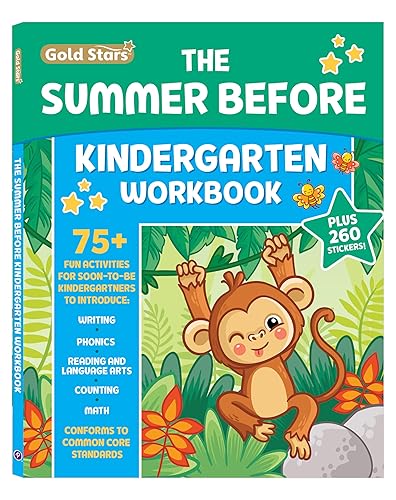 TOP CHOICEBest for a summer bridgeThe Summer Before Kindergarten WorkbookView on Amazon
- 4
 Best for high-volume practiceKindergarten Big Workbook Ages 5-6View on Amazon
- 5
 Best for a broad subject mixThe Complete Kindergarten WorkbookView on Amazon
Our Top Picks
Quick Comparison
| Product | Best for | Key feature |
|---|---|---|
| Kindergarten Readiness Workbook: Get Ready for School | Overall readiness across core skills | Covers letters, numbers, fine motor and classroom skills |
| Kindergarten Big Fun Workbook | A gradual, playful prep year | Tracing, alphabet practice, math and puzzles |
| The Summer Before Kindergarten Workbook | Filling the gap between preschool and school | 75+ activities with first writing and first phonics |
| Kindergarten Big Workbook Ages 5-6 | Children who like plenty of repetition | 220+ activities in writing, phonics and math |
| The Complete Kindergarten Workbook | Families wanting one book for many subjects | 150+ activities across math, reading, writing and science |
Kindergarten Readiness Workbook: Get Ready for School
Kindergarten Readiness Workbook: Get Ready for School Kindergarten Prep: Letters, Numbers, Fine Motor Skills, Life Skills, and Classroom Skills to … (Ages 4–6) (Kindergarten Readiness Series)
Best for: Overall readiness across core skills
This workbook suits parents who want a single resource that touches every area a kindergarten teacher typically checks at the start of the year. It is part of a readiness series, so the layout and instructions are designed to be followed in order rather than dipped into at random. It fits children roughly ages 4 to 6.
Key specs
- Listed for ages 4 to 6
- Covers letters, numbers, fine motor skills, life skills and classroom skills
- Part of the Kindergarten Readiness Series
Pros
- Broad coverage of the skills schools commonly look for
- Fine motor and classroom-behavior pages address areas many prep books skip
- Series format makes it easy to pair with other readiness titles later
Cons
- Breadth means each skill gets fewer pages than in a math- or phonics-only book
- Some parents may want more explicit instructions for the adult guiding the lesson
Bottom line: A strong first choice for a parent who wants balanced coverage and does not yet know which skill needs the most work.
Kindergarten Big Fun Workbook
Kindergarten Big Fun Workbook: Prep Workbook with Kindergarten Learning Activities Featuring Tracing Worksheets, Alphabet Practice, Math Activities and Puzzles
Best for: A gradual, playful prep year
This book is built around tracing, alphabet practice, math activities and puzzles, so it works well for a child who needs the pencil work to feel like play. It suits families with several months before school starts who want to build confidence step by step.
Key specs
- Prep workbook for kindergarten learning
- Includes tracing worksheets, alphabet practice, math activities and puzzles
Pros
- Puzzles and tracing break up the more formal writing practice
- Alphabet and number work progresses in a sensible order
- Good for children who lose interest in long worksheet sessions
Cons
- Less depth in reading and phonics than a dedicated literacy workbook
- Page-by-page difficulty can feel uneven for some children
Bottom line: Best for a parent who wants a low-pressure, activity-rich book to work through over several months.
The Summer Before Kindergarten Workbook
The Summer Before Kindergarten Workbook Bridging Preschool to Kindergarten for Ages 5 – 6: 75+ Activities, First Writing, First Phonics, First … Counting, and First Math (Gold Stars Series)
Best for: Filling the gap between preschool and school
The title signals its purpose: this is a bridge book for the months between the end of preschool and the first day of kindergarten. It is built around short daily activities, so it works well during a summer routine.
Key specs
- Designed for ages 5 to 6
- Listed with more than 75 activities
- Covers first writing, first phonics, counting and first math
Pros
- Clear focus on the transition year rather than a full curriculum
- Short activities suit a daily 15-minute routine
- Phonics and writing introductions are well matched to beginning readers
Cons
- Fewer activities overall than the larger “Big” workbook
- Limited practice for children who are already reading
Bottom line: The right pick for a family who wants a summer-only plan that eases the move into kindergarten.
Kindergarten Big Workbook Ages 5-6
Kindergarten Big Workbook Ages 5 -6: 220+ Activities, Writing, Phonics, Reading & Language Arts, Counting and Math (Gold Stars Series)
Best for: Children who like plenty of repetition
With more than 200 activities listed, this is the high-volume option in the group. It covers writing, phonics, reading and language arts, counting and math, which makes it a good fit for a child who benefits from repeated practice of the same ideas.
Key specs
- Designed for ages 5 to 6
- More than 220 activities listed
- Covers writing, phonics, reading, language arts, counting and math
Pros
- Large number of activities gives a long runway of practice
- Strong balance between literacy and math
- Same Gold Stars series as the summer bridge title, if you want to move up
Cons
- Long length can feel daunting for a child who resists worksheets
- Less variety in format than activity-based books with puzzles
Bottom line: A good choice for a motivated child or a parent who plans to work through the book steadily over several months.
The Complete Kindergarten Workbook
The Complete Kindergarten Workbook: 150+ Fun and Educational Activities to Build Confidence in Math, Reading, Writing, Science, and More for Kids Ages 5-7—Prepare for Academic Excellence!
Best for: Families wanting one book for many subjects
This workbook packs math, reading, writing and science into one volume, with more than 150 activities listed for children about ages 5 to 7. It suits families who want a single book that introduces early science alongside the core subjects.
Key specs
- Listed for kids ages 5 to 7
- More than 150 activities
- Covers math, reading, writing and science
Pros
- Science content is less common in kindergarten prep books
- One book covers several subject areas
- Age range extends a little past kindergarten entry, useful if the child starts school later
Cons
- Breadth across four subjects means each topic gets moderate depth
- Listing is less specific about the exact skill sequence than some series books
Bottom line: Pick this if you want one book that spans the subjects kindergarten covers, plus some early science.
Buying Guide
Check the age range against your child
Most kindergarten readiness workbooks are written for ages 4 to 6, but the skill level inside can vary a lot. A child who is already writing names and counting past 20 may find a book labeled for ages 4 to 6 too easy, while a child still learning to hold a pencil may find a 5-to-6 book frustrating. Look at the sample pages if the listing includes them, and match the difficulty to what your child can already do. For a deeper look at what to observe, see Kindergarten Readiness Checklist for Parents: 7 Best Picks Compared (2026).
Good picks for this: Kindergarten Readiness Workbook: Get Ready for School; Kindergarten Big Fun Workbook
Look at the skills covered, not just the page count
A workbook with 220 activities may still leave out fine motor work or classroom behavior. Before buying, list the skills you want to cover: letter recognition, letter sounds, counting, writing the name, cutting, holding a pencil, following multi-step directions and sitting through a short group task. Then check whether the book addresses them. The skills that teachers most often mention are described in Readiness Skills for Kindergarten: A Step-by-Step Guide for Parents.
Good picks for this: Kindergarten Readiness Workbook: Get Ready for School; The Complete Kindergarten Workbook
Consider the length and your daily time
Early learners do best with short, regular sessions. Many parents find that 10 to 20 minutes a day is more sustainable than one long weekend session. Divide the total number of activities by the number of weeks you have before school starts. If you have eight weeks and a book with 75 activities, you need about two activities a day with a few extra for review. A book with 220 activities may be a better fit if you have a full school year.
Good picks for this: The Summer Before Kindergarten Workbook; Kindergarten Big Workbook Ages 5-6
Check the format and page layout
Look for large tracing letters, clear space for writing and simple instructions a child can follow with a little help. Pages crowded with small print or many tiny boxes can be hard for a 5-year-old to use with a crayon or pencil. Spiral-bound or lay-flat books are easier for young children to open and keep open. Puzzles, mazes and tracing pages can make the work feel like play, which matters for children who tire of plain worksheets.
Good picks for this: Kindergarten Big Fun Workbook; Kindergarten Readiness Workbook: Get Ready for School
Match the subject balance to your child’s strengths
Some children arrive at kindergarten reading simple words but struggle with cutting. Others can count to 100 and still cannot write their name. Before choosing, note which areas are strong and which need work. A literacy-heavy book suits a child who already knows letter sounds and needs more reading practice. A broader book is better if you do not know where the gaps are yet.
Good picks for this: Kindergarten Big Workbook Ages 5-6; The Complete Kindergarten Workbook
Think about durability and care
Workbooks get used hard. Look for sturdy paper that will not tear when a child erases or presses hard with a crayon, and a binding that lets the book lie flat. Keep a small pouch of extra pencils, crayons and a pair of blunt scissors nearby so the workbook is ready to use. Store completed pages in a folder if you want to track progress across the year.
Good picks for this: The Summer Before Kindergarten Workbook; Kindergarten Big Fun Workbook
Plan for review and follow-up
Good workbooks lead to more practice, not a finished checklist. After a child completes a section, return to earlier pages every few days for a quick review. If you want to check progress against a standard list, see Kindergarten Readiness Assessment Tools for Parents and Signs of Kindergarten Readiness: 8 Skills to Check Before Fall.
Good picks for this: Kindergarten Readiness Workbook: Get Ready for School; The Complete Kindergarten Workbook
FAQ
What age should my child be to start a kindergarten readiness workbook?
Most of these workbooks are labeled for ages 4 to 6, and many children start between ages 4 and a half and 5. The better guide is your child’s current skills rather than age. If your child can already recognize most letters and count to 10, a book for ages 5 to 6 may be a good match.
Do I need to work through the whole workbook?
No. You can skip pages that your child has already mastered and spend more time on areas that need work. Many parents find that doing the first few pages of each section, then returning to the harder ones, gives a good picture of what to focus on.
How many minutes a day should we spend?
Short sessions tend to work best for young children. Many early-childhood guidelines suggest keeping focused tasks to a few minutes per year of age, so a 5-year-old might manage 10 to 20 minutes with breaks. Stop before your child gets frustrated, and end on a page they can complete.
Can a workbook replace preschool?
A workbook can reinforce letters, numbers and early writing, but it does not replace the social and play-based learning that preschool provides. Children also benefit from reading aloud, talking together, building with blocks and playing with other children. Use a workbook as one part of a broader routine.
What if my child resists the workbook?
Try a shorter session, a different time of day or a book with more puzzles and tracing. Let your child choose which page to start with, and praise effort rather than speed. If resistance continues for weeks, talk with your child’s preschool teacher or pediatrician about whether other factors are involved. A professional can offer guidance specific to your child.
Should I look for a workbook that matches my child’s school?
Ask the school whether it publishes a list of expected skills or uses a particular curriculum. Many schools share a kindergarten readiness list at registration, and matching your practice to that list is more useful than matching a specific book.
Are these workbooks enough to prepare my child for kindergarten testing?
Workbooks can build the skills that screening tools measure, but they do not replicate the tests themselves. For an overview of what screenings look like, see Screening for Kindergarten Readiness: A Step-by-Step Guide for Parents and What Is on a Kindergarten Readiness Test? A Parent's Guide.
Conclusion
The best kindergarten readiness workbooks differ mainly in how broad they are, how long they run and how much practice they provide. For the widest coverage of the skills schools look for, start with the Kindergarten Readiness Workbook: Get Ready for School. Families with several months to prepare may prefer the playful pacing of the Kindergarten Big Fun Workbook. A short summer plan fits The Summer Before Kindergarten Workbook, while the Kindergarten Big Workbook Ages 5-6 suits children who need lots of repetition. For one book that also introduces science, The Complete Kindergarten Workbook is worth a look. Match the choice to your child’s current skills, your available time and the areas you most want to strengthen.
Sources
- Federal education resources and guidance on early learning and the transition to school (ed.gov)
- Child development milestones and developmental monitoring for young children (cdc.gov)
- Early childhood learning standards and developmentally appropriate practice guidance
Related reading
About Colin Foster
Colin Foster is part of our editorial team and reviews and edits our early learning at home guides, checking product details against manufacturer specifications and owner feedback.