By Colin Foster
Updated November 2026
Learning the alphabet toys work best when they match your child’s stage, let them practice letter names and sounds through play, and keep the focus short and fun. This guide walks you through how to pick the right toys, set up a simple routine, and avoid the mistakes that make letter practice feel like a chore. By the end, you’ll have a clear plan for using toys for learning alphabet skills at home.
Start by Matching the Toy to Your Child’s Stage
Most children begin by recognizing that letters are different from pictures, then move on to naming letters, and finally linking each letter to a sound. A toy that suits a two-year-old may bore a four-year-old, and the reverse is also true. Before buying anything, check which of these stages your child is in:
Shopping for one? See our guide: Top 5 Best Toys for Learning the Alphabet: Buyer's Guide for Preschoolers.
- Letter recognition: Your child points to or matches a letter shape. Look for large, chunky letters with tactile edges.
- Letter names: Your child says “B” when shown B. Puzzles and flip cards with a picture and letter pair work well here.
- Letter sounds: Your child says “buh” for B. Toys that play the sound when a letter is pressed or placed are helpful.
Choose Toys That Cover Sight, Touch, and Sound
Children learn letters faster when they see, touch, and hear them together. A wooden letter that a child traces with a finger, then places on a matching board while saying the name, uses all three channels. Electronic letter pads add audio feedback, which helps with sounds, though many educators suggest keeping screen-free options as the main tool. Good choices include: For another angle, check out Selecting Educational Toys and Learning Products for Toddlers.
- Wooden or foam letter tiles with raised edges for tracing
- Shape sorters that match uppercase and lowercase letters
- Magnetic letter boards for building simple words
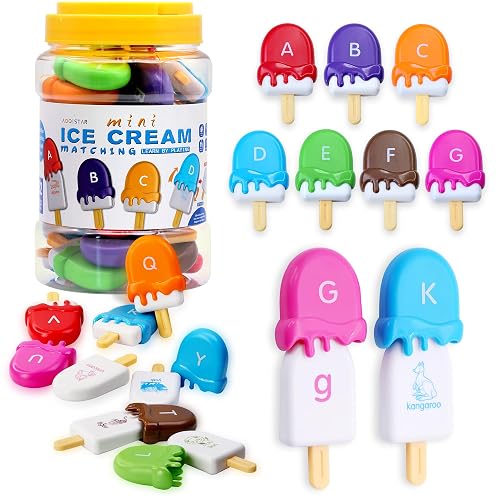
- Alphabet puzzles with a picture on each piece that starts with that letter
- Letter stamps and playdough sets for hands-on forming
Build a Short, Repeatable Practice Routine
Consistency matters more than length. Five to ten minutes a day, several days a week, is enough for most preschoolers. Follow this simple sequence each session:
- Pick three to five letters for the week, and keep them the same for several days.
- Show the uppercase and lowercase forms together and say the name of each letter.
- Give a sound cue, such as “B says buh,” and have your child repeat it.
- Let your child use a toy to find, match, or build each letter.
- Finish with a quick review, asking your child to name letters from the week.
Rotating toys every week or two keeps the activity fresh without overwhelming your child with choices. For a broader look at how these toys fit into everyday play, see Play Based Learning Toys for 3 Year Olds: 7 Best Picks (2026).
Match Toy Types to Common Learning Goals
Different toys serve different goals, so a quick comparison helps you spend your time wisely.
| Learning goal | Toy type to look for |
|---|---|
| Recognizing letter shapes | Chunky wooden letters, shape sorters |
| Naming letters | Alphabet puzzles, flip cards |
| Connecting letters to sounds | Sound-button letter boards, picture-letter matching |
| Forming letters by hand | Letter stamps, playdough, tracing boards |
If your child is also working on early reading or counting, you may find options in Top 7 Educational and Learning Toys for Preschoolers Compared (2026). For a set designed around phonics, Super Simple Learning Toys: 7 Best Picks Compared (2026) is a useful comparison.
Common Mistakes to Avoid
- Introducing too many letters at once. Stick to three to five new letters per week.
- Skipping sounds. Names alone don’t help with reading, so pair each letter with its sound.
- Pushing when your child is tired or disengaged. End the session while it’s still fun.
- Relying only on screens. Hands-on tiles and puzzles build letter formation skills that screens can’t.
- Using only capital letters. Mix in lowercase early so your child recognizes both forms.
Recommended Gear
A few simple supplies make letter practice easier to set up and repeat.
- Wooden alphabet letter tiles: Their raised edges let children trace letters and feel the shape before naming them. View on Amazon
- Magnetic letter board: It lets children build short words and see letters combine into sounds. View on Amazon
- Alphabet puzzle set: Each piece pairs a letter with a picture, which supports letter naming and early vocabulary. View on Amazon
FAQ
What age is best for learning the alphabet toys?
Many children start showing interest in letters around age two to three, and most are ready for letter names and sounds by about four. Start with simple shapes and tactile letters, then add sounds as your child becomes comfortable.
How many letters should my child learn at once?
Three to five letters per week is a practical pace for most preschoolers. Review earlier letters regularly so they stay familiar.
Do electronic alphabet toys work better than hands-on ones?
Electronic toys can add helpful sound feedback, but hands-on toys build letter formation and matching skills. Many families use both, with hands-on play as the main activity and electronic toys as occasional support.
Conclusion
Choose toys that match your child’s current stage, cover sight, touch, and sound, and fit into a short daily routine. Introduce a few letters at a time, pair each one with its sound, and keep sessions playful. With steady practice, learning the alphabet toys become a reliable part of your child’s early learning at home.
Ready to choose one?
About Colin Foster
Colin Foster is part of our editorial team and reviews and edits our early learning at home guides, checking product details against manufacturer specifications and owner feedback.