By Audrey Hayes
Updated November 2026
If you are wondering about homeschool preschool where to start, the honest answer is usually small: a short daily routine, a few hands-on skills, and one or two reliable books or workbooks. Many parents feel pressure to buy a full curriculum before their child has even sat down at the table. This guide narrows the field to three products that give a beginner something concrete to open on the first morning. Our selection criteria were age fit for a preschool-aged child, clear skill focus, low setup time, and the kind of owner feedback patterns that suggest a book will still be useful after a few weeks.
Our top picks at a glance
- 1
 TOP CHOICEBest overallKick Start Kindergarten WorkbookView on Amazon
- 2
 Best for independent play and tracingWipe Clean Preschool Activity Book for Kids Ages 3 to 5View on Amazon
- 3
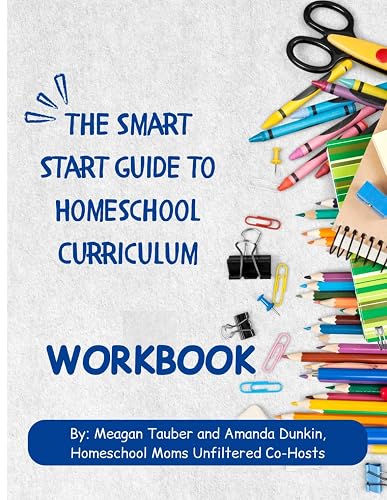 Best for planning your first yearThe Smart Start Guide to Homeschool CurriculumView on Amazon
Our Top Picks
Quick Comparison
| Product | Best for | Key feature |
|---|---|---|
| Kick Start Kindergarten Workbook | Children moving from Pre-K toward Kindergarten | Handwriting lessons sequenced for the in-between age |
| Wipe Clean Preschool Activity Book for Kids Ages 3 to 5 | Young children who want to practice independently | Reusable pages covering letters, numbers, shapes and tracing |
| The Smart Start Guide to Homeschool Curriculum | Parents who feel overwhelmed by curriculum choices | A decision-making guide to help you choose a path |
Kick Start Kindergarten Workbook
Begin print handwriting with lessons designed for the child between Pre-K and Kindergarten; classroom, homeschool, tutor, OT Kick Start Kindergarten Workbook, Pre-K/TK, Age 4+
Best for: Children who are ready to begin structured handwriting practice
This workbook suits a child who is around four and has shown interest in letters, or who is nearing the end of a pre-K year. Parents who want a clear, step-by-step handwriting path without building lessons from scratch will find it a practical starting point.
Key specs
- Designed for the age range between Pre-K and Kindergarten
- Listed for classroom, homeschool and tutoring use
- Listed for children age 4 and up
Pros
- Focused on handwriting, a skill many preschool programs leave until later
- Works as a self-contained daily practice without extra materials
- Useful as a bridge if you later move toward a fuller kindergarten plan
Cons
- Handwriting only, so you will still need books for reading, math and play
- Best used in short sessions, which may not suit very young or restless children
Bottom line: A good pick for a parent who wants one clear academic habit to build first, especially for a child ready to hold a pencil with purpose.
Wipe Clean Preschool Activity Book for Kids Ages 3 to 5
Wipe Clean Preschool Activity Book for Kids Ages 3 to 5: ABCs, Counting, Opposites, Shapes, Tracing, Pen Control and More (Start Little Learn Big Series)
Best for: Children who want to practice on their own while you prepare lunch or work with a sibling
This is a broad, low-pressure starting point for ages three to five. Its wipe-clean pages make it easy to reuse, and owners often report that children enjoy the repeatable format, since the same page can be practiced again and again.
Key specs
- Listed for children ages 3 to 5
- Covers ABCs, counting, opposites, shapes, tracing and pen control
- Wipe-clean pages for repeated use
Pros
- Covers several early skills in one book, which keeps the setup simple
- Wipe-clean format supports repeated practice with a dry-erase marker
- Easy for a child to use with minimal adult help
Cons
- Shallow on each topic, so it works better as a supplement than a full program
- Some children lose interest after the first few pages if there is no hands-on play to pair with it
Bottom line: The most flexible choice here, ideal for a parent who wants a predictable independent activity alongside hands-on play.
The Smart Start Guide to Homeschool Curriculum
The Smart Start Guide to Homeschool Curriculum: Everything You Need to Cut Through The Noise and Choose with Confidence
Best for: Parents who want a planning framework before buying materials
This is a reference book rather than a child workbook. It is aimed at parents who are still deciding what kind of homeschool approach fits their family, and who would rather understand the options before spending on materials.
Key specs
- Written for parents selecting homeschool curriculum
- Focused on helping readers choose with confidence rather than listing products
Pros
- Helps you compare approaches before committing money or time
- Useful for parents who feel stuck in the research phase
- Reduces the risk of buying too many overlapping materials
Cons
- Does not teach your child anything directly
- Advice may feel general to parents who already have a clear plan
Bottom line: Best for a parent at the very start who needs a decision framework; skip it if you already know which method you want.
Buying Guide
Match the skill to your child’s readiness
Preschool homeschooling works best when the material matches what your child can already do. A three-year-old usually benefits from tracing, letter recognition and counting through play, while a child near five may be ready for pencil control and simple writing. Watch your child for a few days before you commit to any single book.
Good picks for this: Wipe Clean Preschool Activity Book for Kids Ages 3 to 5, Kick Start Kindergarten Workbook
Check the age range on the cover
Publishers state age ranges for a reason. A workbook labeled for ages four and up may frustrate a three-year-old, and a book labeled for ages three to five may feel too easy for a confident child. Use the stated range as a starting point, then adjust based on how your child responds.
Good picks for this: Wipe Clean Preschool Activity Book for Kids Ages 3 to 5, Kick Start Kindergarten Workbook
Look at how many subjects a book covers
Some books focus on one skill, such as handwriting, while others bundle several early topics. A single-subject book is easier to fit into a short routine. A multi-subject book saves shopping time but may feel thin in each area. Decide whether you want depth or breadth first.
Good picks for this: Kick Start Kindergarten Workbook, Wipe Clean Preschool Activity Book for Kids Ages 3 to 5
Consider reusability
Workbooks that can be wiped clean let siblings or repeated sessions use the same pages. Standard paper workbooks are not reusable, so plan for a new book each time your child completes one. If you expect multiple children or want to repeat favorite pages, reusable formats offer clear value.
Good picks for this: Wipe Clean Preschool Activity Book for Kids Ages 3 to 5
Plan the year before buying
Many new homeschool parents buy materials before deciding on their overall approach, which leads to overlap and wasted effort. Spend a little time mapping out goals for the year, such as letter sounds by spring or counting to 20 by fall. Once you know your goals, selecting materials becomes much simpler.
Good picks for this: The Smart Start Guide to Homeschool Curriculum
Think about durability and care
Preschool materials get handled roughly and often. Look for sturdy covers and pages that hold up to repeated use. For wipe-clean books, use dry-erase markers rather than permanent ink, and wipe with a damp cloth after each session. Storing books upright in a basket keeps them from bending.
Good picks for this: Wipe Clean Preschool Activity Book for Kids Ages 3 to 5, Kick Start Kindergarten Workbook
Keep the daily time short
A common guideline for young children is short, frequent sessions rather than long lessons. Many parents start with 10 to 15 minutes of focused work and add play or movement between activities. Shorter blocks reduce frustration and make it easier to build a steady habit.
Good picks for this: Wipe Clean Preschool Activity Book for Kids Ages 3 to 5, Kick Start Kindergarten Workbook
FAQ
What should I do first with homeschool preschool?
Start with a simple daily routine that includes one short reading or letter activity, one counting or shape activity, and plenty of free play. Choose one or two materials rather than buying a full set, then adjust after a couple of weeks.
How long should a homeschool preschool day last?
For most children between three and five, structured learning of 15 to 30 minutes in total is a reasonable target, broken into several short blocks. Play and read-alouds can fill the rest of the day and count toward learning.
Do I need a full curriculum for preschool?
No. Many families use a few workbooks, library books and hands-on activities. A full curriculum can help parents who want a schedule, but it is not required at this age.
How do I know if my child is ready for handwriting practice?
Signs of readiness often include a comfortable pencil grip, interest in letters, and the ability to copy simple lines or shapes. If your child resists or struggles, return to tracing and play-based fine motor activities for a while.
Should I follow the age labels on workbooks exactly?
Use them as a guide, not a rule. Children develop at different rates, so choose the book that matches your child’s current skills and adjust if the work feels too easy or too hard.
Can I combine several workbooks?
Yes, as long as they do not overwhelm your child. Pick one primary activity per day and use the others as optional extras. Keeping the number of materials small makes routines easier to maintain.
When should I talk to a professional about my child’s development?
If you have concerns about speech, motor skills, attention or learning, speak with your pediatrician or an early childhood specialist. Homeschooling materials cannot replace an evaluation when one is needed.
Conclusion
For parents asking about homeschool preschool where to start, the best first step is a small, consistent routine built around one or two well-chosen materials. The Kick Start Kindergarten Workbook suits a child ready for handwriting, the Wipe Clean Preschool Activity Book fits a wider age range and independent practice, and The Smart Start Guide to Homeschool Curriculum helps parents who want to plan before they buy. Match the pick to your child’s readiness and your own planning style, and begin with short, enjoyable sessions.
For more context, you may find When to Start Homeschool Preschool: A Guide for Parents helpful, along with Preschool Homeschool Schedule Ideas: A Step-by-Step Daily Plan for building a routine and Preschool Homeschool Set Up: A Step-by-Step Guide for Parents for organizing your space.
Sources
- Developmental milestones and early childhood growth guidance for children ages three to five (cdc.gov)
- Research summaries on early literacy and early math skill development (nih.gov)
- Pediatric guidance on screen time, play and early learning routines (aap.org)
Related reading
About Audrey Hayes
Audrey Hayes is part of our editorial team and reviews and edits our early learning at home guides, checking product details against manufacturer specifications and owner feedback.