By Colin Foster
Updated November 2026
Parents looking for math learning toys for 5 year olds usually want something that builds number sense, counting, addition and early subtraction without turning every practice session into a worksheet. The toys below were chosen by comparing manufacturer specifications, brand reputation for early-education products, and patterns that appear repeatedly in owner feedback, such as whether a toy holds attention past the first week and whether it works for more than one child. Our selection criteria were age fit for kindergarten-level math, hands-on or game-based learning, durability, clear skill focus, and how easily the toy works at home, in a homeschool setting or during family game night. None of these picks were hands-on tested by us; this is a research-based roundup.
Our top picks at a glance
- 1
 TOP CHOICEBest overallLearning Resources MathLink Cubes, Set of 100View on Amazon
- 2
 TOP CHOICEBest for family game nightNumber Hunter Math Board Game for Kids 5-7View on Amazon
- 3
 TOP CHOICEBest for counting and groupingMontessori Number Counting Block Toys for KidsView on Amazon
- 4
 Best for a 2-in-1 wooden learning set2-in-1 Wooden Math Manipulatives and Teaching ClockView on Amazon
- 5
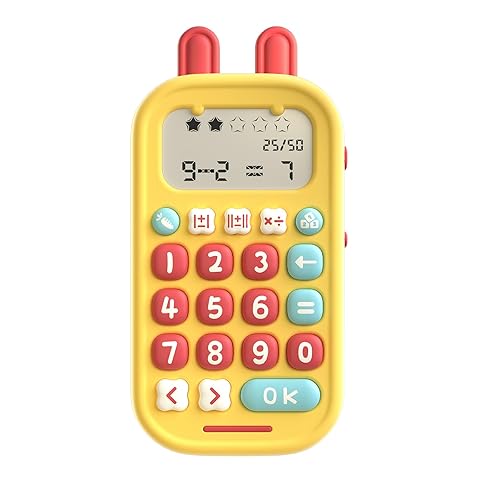 Best for travel and independent practicealilo Math Games for Kids Ages 5-12View on Amazon
- 6
 Best budget pickPreschool Educational Toys, Math Manipulatives Counting ToysView on Amazon
Our Top Picks
| Product | Best for | Key feature |
|---|---|---|
| Learning Resources MathLink Cubes | Hands-on early math and pattern building | Set of 100 linking cubes for counting and operations |
| Number Hunter Math Board Game for Kids 5-7 | Family game night and addition/subtraction practice | Board game format for two or more players |
| Montessori Number Counting Block Toys | Counting and quantity matching | Number blocks paired with counting objects |
| 2-in-1 Wooden Math Manipulatives and Teaching Clock | Hands-on number work plus time-telling | Counting blocks combined with a teaching clock |
| alilo Math Games for Kids Ages 5-12 | Portable practice on the go | Five modes and 19 math games in a travel-friendly device |
| Preschool Educational Math Manipulatives Counting Toys | Budget-conscious counting practice | Math manipulatives for early counting and sorting |
Learning Resources MathLink Cubes, Set of 100
Learning Resources MathLink Cubes, Homeschool, Educational Counting Toy, Math Cubes, Linking Cubes, Early Math Skills, Math Manipulatives, Set of 100 Cubes, STEM Toys, Ages 5+
Best for: Hands-on early math and pattern building
This set suits a child who learns best by touching and building. Parents running a homeschool preschool or kindergarten-prep routine often use linking cubes for counting, skip counting, grouping and simple addition and subtraction with physical objects.
Key specs:
- Set of 100 interlocking cubes
- Labeled for ages 5 and up
- Designed for early math manipulatives and counting activities
Pros:
- Open-ended, so the same set supports counting, patterns, and early multiplication concepts as skills grow
- Cubes connect securely, making them easy for small hands to build towers and rows
- Works with many activities from one purchase
Cons:
- Needs an adult to suggest activities at first; the cubes do not teach on their own
- Loose cubes can scatter, so a storage container helps
Bottom line: The best starting point for a child who needs concrete objects to understand numbers. Pick this if you want one versatile set rather than a single-purpose game.
Number Hunter Math Board Game for Kids 5-7
Addition and subtraction game, STEM toy for 5+ year old, homeschool essentials, classroom learning, family game night Number Hunter Math Board Game for Kids 5-7, 1st Grade & Kindergarten
Best for: Family game night and addition/subtraction practice
A good fit for a family that wants math practice to feel like playing a game together. It targets addition and subtraction for children in the 5 to 7 range and works in a classroom or homeschool setting too.
Key specs:
- Board game format for addition and subtraction
- Designed for ages 5 to 7 and kindergarten through first grade
Pros:
- Game format keeps children engaged longer than drill cards
- Works for siblings with slightly different skill levels
- Reinforces turn-taking alongside number skills
Cons:
- Requires at least one adult or older child to read and manage turns for younger players
- Game play can be repetitive after many sessions
Bottom line: Ideal if your goal is regular, low-pressure math practice with the whole family. Choose it over individual activity toys when you want a shared experience.
Montessori Number Counting Block Toys for Kids
Montessori Number Counting Block Toys for Kids, Educational Toys for 3-5 Year Old Boys Girls Christmas Birthday Gifts Preschool Math Manipulatives Learning Toys for Toddlers 2-4
Best for: Counting and quantity matching
Aimed at children who are building the link between a numeral and the quantity it represents. The Montessori-style approach uses concrete materials, which many early educators recommend for this stage.
Key specs:
- Number counting blocks for ages 3 to 5 in the listing
- Montessori-style counting materials
Pros:
- Concrete materials help connect numerals to quantities
- Self-checking design lets children work without constant correction
- Suits independent work time
Cons:
- May feel too simple for a 5 year old who already counts confidently to 100
- Small pieces need supervision with younger siblings
Bottom line: Best for a 5 year old who is still solidifying counting and number recognition. Choose it if your child needs more foundation before moving to addition.
2-in-1 Wooden Math Manipulatives and Teaching Clock
Preschool Learning Activities & Number Counting Blocks, Montessori Toys Birthday Gifts for Toddlers 3 4 5 Year Old Boys Girls 2-in-1 Wooden Math Manipulatives & Teaching Clock Toys
Best for: Hands-on number work plus time-telling
This set combines counting blocks with a teaching clock, so it covers number sense and an early introduction to telling time in one set. It suits families who want two skills addressed without buying two toys.
Key specs:
- Wooden counting blocks and teaching clock in one set
- Listed for toddlers and preschoolers aged 3 to 5
Pros:
- Two learning areas in a single purchase
- Wood construction suits children who prefer natural materials
- The clock introduces time concepts alongside number practice
Cons:
- Clock-reading is a separate skill that may need more practice than the counting portion
- Combining two toys in one can mean each part gets less depth than a dedicated product
Bottom line: A practical choice for a child ready to move from counting into early time concepts. Pick it when you want a broader toy for the early-kindergarten stage.
alilo Math Games for Kids Ages 5-12
Practicing Addition, Subtraction, Multiplication and Division, Educational Toy with 5 Modes, 19 Math Games,50K Math Questions alilo Math Games for Kids Ages 5-12, Portable Math Toys for Travel
Best for: Portable practice on the go
A digital option for families who want structured math games that travel easily. Its listing covers addition, subtraction, multiplication and division, so it grows with a child beyond the kindergarten level.
Key specs:
- Five modes and 19 math games
- Listed as covering addition, subtraction, multiplication and division
- Designed for ages 5 to 12
Pros:
- Portable, useful for car rides, waiting rooms and travel
- Covers several operations, so the device stays useful for years
- Gives independent practice without an adult needing to run each game
Cons:
- Screen-based, so it adds to a child’s screen time
- Some families prefer hands-on materials for this age
Bottom line: Pick this if you want a portable, self-directed digital math tool. Balance it with physical manipulatives so your child is not learning math only through a screen.
Preschool Educational Toys, Math Manipulatives Counting Toys
Preschool Educational Toys, Math Manipulatives, Kids Boys Girls Birthday Gifts, Counting Toys, Preschool Learning Activities Montessori Learning Toys for 3 4 5 Year Old Gift, Number Counting Block Toy
Best for: Budget-conscious counting practice
A budget pick for families who want a basic set of counting and manipulative materials for early math. It works as a gift or a supplement to other toys.
Key specs:
- Math manipulatives and counting toys for ages 3 to 5 in the listing
- Montessori-style learning activities
Pros:
- Accessible option for families building a math toolkit gradually
- Covers counting and sorting basics
- Works well as a birthday or holiday gift
Cons:
- Fewer activities than multi-mode products
- Materials can feel basic for a child already comfortable with addition
Bottom line: A sensible choice if you want an affordable manipulative set for early counting. Choose it as a starting kit before investing in a more advanced toy.
Buying Guide
Match the toy to the math skill your child is building
Five year olds vary widely. Some are still mastering counting to 20, while others are adding and subtracting within 10. Look at the skill the toy targets before you buy. Counting blocks suit foundation-building, and game-based or digital products suit children ready for addition and subtraction.
Good picks for this: Montessori Number Counting Block Toys for Kids, Number Hunter Math Board Game for Kids 5-7
Check whether the toy is open-ended or single-purpose
Open-ended manipulatives like linking cubes can be used for many skills as a child grows. Single-purpose games do one job well but offer fewer uses. If you want a toy that lasts through first grade, favor open-ended materials.
Good picks for this: Learning Resources MathLink Cubes, 2-in-1 Wooden Math Manipulatives and Teaching Clock
Consider hands-on versus screen-based learning
Physical materials let children move and manipulate objects, which supports early number sense. Digital tools offer structured practice and portability. Many early-education guidelines suggest that screen time for young children should be limited and purposeful, so balance any device with hands-on play.
Good picks for this: Learning Resources MathLink Cubes, alilo Math Games for Kids Ages 5-12
Think about group play and family use
If siblings or friends will play, choose a game with clear turn rules and adjustable difficulty. Solo or independent-practice toys work better when you need a child to work without an adult nearby.
Good picks for this: Number Hunter Math Board Game for Kids 5-7, Preschool Educational Toys Math Manipulatives
Look at durability and materials
Wooden pieces tend to hold up well to repeated handling, while small plastic parts can break or get lost. Check that pieces are sized appropriately for your household, especially if younger children are present. Manufacturers typically state age ranges and small-parts warnings in product listings; read them before buying.
Good picks for this: 2-in-1 Wooden Math Manipulatives and Teaching Clock, Learning Resources MathLink Cubes
Consider portability for travel and homeschool
If you travel often or move between rooms during a homeschool day, a compact or handheld product is easier to manage than a large board game or a bin of blocks.
Good picks for this: alilo Math Games for Kids Ages 5-12
Plan for storage and care
Sets with many small pieces are easier to keep organized with a labeled bin or tray. Wipe wooden or plastic pieces with a damp cloth, and check for missing parts after each session so the set remains complete.
Good picks for this: Learning Resources MathLink Cubes, Montessori Number Counting Block Toys for Kids
FAQ
What math skills should a 5 year old be learning?
Most kindergarten standards expect children to count to 100 by ones and tens, recognize written numerals, compare quantities, and begin simple addition and subtraction within 10. Toys that target these skills are a good fit for this age.
Are math toys better than worksheets for 5 year olds?
Hands-on and game-based practice often holds attention longer and gives children a concrete way to understand quantity. Short worksheets can still help with writing numerals, so many families use both.
How long should a math toy session last?
For most 5 year olds, sessions of 10 to 20 minutes work well, with breaks. Stop when your child loses interest so the activity stays positive.
Can one toy cover counting through addition?
Open-ended manipulatives such as linking cubes can support counting, grouping and early addition. Board games and digital products usually focus on a narrower range of operations.
Do math toys need batteries?
Most manipulatives and board games do not. Digital products, such as handheld math games, require batteries or charging. Check the product listing for power needs before buying.
How do I know if a toy is too easy or too hard?
If your child completes the activity without thinking, it is probably too easy. If they become frustrated almost immediately, it may be too advanced. Choose a toy that leaves them working at the edge of what they know.
Conclusion
For most families, Learning Resources MathLink Cubes offer the best mix of hands-on learning and long-term use. Choose the Number Hunter Math Board Game if you want a shared family activity, or the Montessori counting blocks if your child needs more foundation in counting. The 2-in-1 wooden set suits children ready for early time concepts, the alilo device fits portable practice, and the preschool manipulatives are a sensible budget starting point. Match the toy to your child’s current skill level and your household’s routine, and a good math toy will keep getting used.
Sources
- Federal education resources on early learning and mathematics (ed.gov)
- Toy safety standards, age labeling and small-parts warnings (cpsc.gov)
- Developmentally appropriate practice guidance for early math
Related reading
- VTech Learning Toys for 2 Year Olds: How to Choose the Right Ones
- Toys for 3 Year Olds Learning: 5 Best Picks Compared (2026)
- Play Based Learning Toys for 3 Year Olds: 7 Best Picks (2026)
About Colin Foster
Colin Foster is part of our editorial team and reviews and edits our early learning at home guides, checking product details against manufacturer specifications and owner feedback.