By Colin Foster
Updated November 2026
Parents and caregivers searching for the best toys for learning to read and write are usually trying to answer one practical question: which hands-on tools will actually move a young child from recognizing letters to spelling words and forming them on paper? This list focuses on that transition. We compared seven products across four criteria: how directly they build letter recognition and phonics, whether they support handwriting or spelling, how much adult guidance they need, and how well the design holds up to daily use by children roughly ages three to six.
Our top picks at a glance
- 1
 TOP CHOICEBest overallCVC Word Builder with Alphabet Cards for Preschool Learning ActivitiesView on Amazon
- 2
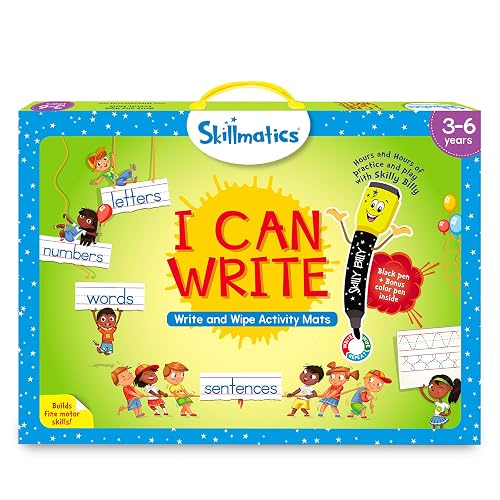 TOP CHOICEBest for handwriting practiceSkillmatics I Can Write Preschool Learning Activity Book with Reusable Write and Wipe MatsView on Amazon
- 3
 TOP CHOICEBest for letter tracingGAMENOTE 2 in 1 Magnetic Letter Board for Preschool LearningView on Amazon
- 4
 Best for sight wordsSight Words Alphabet Cards, See and Spell CVC Word Spelling ToyView on Amazon
- 5
 Best for hands-on spellingMelissa and Doug See and Spell Wooden Montessori ToysView on Amazon
- 6
 Best for independent practiceEducational Insights Hot Dots Sight Words Card SetView on Amazon
- 7
 Best budget pickMagic Grooved Reusable Handwriting Practice Workbooks with Disappearing Ink PensView on Amazon
Our Top Picks
Quick Comparison
| Product | Best for | Key feature |
|---|---|---|
| CVC Word Builder with Alphabet Cards | Building consonant-vowel-consonant words | Self-check letter cards for spelling |
| Reusable Write and Wipe Mats with Skillmatics I Can Write | Handwriting practice | Wipe-clean mats and activity book |
| GAMENOTE Magnetic Letter Board Double Sided | Letter tracing and recognition | Magnetic uppercase and lowercase letters |
| Sight Words Alphabet Cards with See and Spell CVC Toy | Sight word memorization | Flash-style cards with phonics focus |
| Melissa and Doug See and Spell Wooden Montessori Toys | Hands-on spelling | Double-sided boards with wooden letters |
| Hot Dots Sight Words Card Set | Independent practice | Interactive pen gives audio feedback |
| Magic Grooved Reusable Handwriting Practice Workbooks | Pencil control at low cost | Disappearing-ink grooved pages |
CVC Word Builder with Alphabet Cards for Preschool Learning Activities
CVC Word Builder with Alphabet Cards for Preschool Learning Activities, Word Building, Learn to Read, Birthday Gifts See & Spell Learning Toy, Spelling Game for Kids Ages 3-6
Best for: Building simple three-letter words and connecting sounds to spelling For a deeper look, 6 Best Baby Bjorn Carrier Toys R Us Options for 2026 covers this in detail.
This set suits children who already know most letter names and are starting to blend sounds into words. It is built around consonant-vowel-consonant patterns, the classic first step in decoding short words such as “cat” or “dog,” so it fits well into a phonics routine at home.
Key specs
- Designed for ages 3 to 6, per the listing
- Alphabet cards used to spell and check CVC words
- Marketed as a see-and-spell activity for preschool learning
Pros
- Directly targets phonics and short-vowel word building
- Self-checking format lets children work without constant adult correction
- Reusable and easy to store in a small bin
Cons
- Best suited to children who know letter sounds; less useful for pure beginners
- Limited to CVC patterns, so older readers will need additional material
Bottom line: A strong first purchase for a preschooler moving from letter recognition into decoding. Pair it with a daily five-minute word-building routine.
Skillmatics I Can Write Preschool Learning Activity Book with Reusable Write and Wipe Mats
Reusable Write and Wipe Mats, Educational Toy, Handwriting Aid, Montessori Gifts for Students, Kids, Toddlers Ages 3, 4, 5, 6 Skillmatics I Can Write – Preschool Learning Activity Book, Gift for Kids
Best for: Handwriting practice and pencil control
Good for children who need repeated, low-pressure handwriting practice. The wipe-clean mats let a child trace and retrace strokes without wasting paper, which many parents find helpful for reluctant writers.
Key specs
- Reusable write-and-wipe mats for repeated tracing
- Accompanying activity book for preschool-level writing tasks
- Listed for ages 3 to 6
Pros
- Reusable surface cuts down on paper use
- Covers pre-writing strokes that lead into letter formation
- Works for both home and classroom use
Cons
- Wipe-clean surfaces can show wear over heavy use, according to some owners
- Does not teach reading on its own; focus is handwriting
Bottom line: Ideal for children building fine motor control and pencil grip before or alongside formal letter writing.
GAMENOTE 2 in 1 Magnetic Letter Board for Preschool Learning
2 in 1 preschool learning toy, uppercase lowercase letters, handwriting practice, educational classroom toy for toddlers kids GAMENOTE Magnetic Letter Board Double Sided, ABC Alphabet Tracing Board
Best for: Letter tracing and uppercase-lowercase matching
A double-sided magnetic board suits younger learners who are still matching uppercase and lowercase forms. The magnetic letters stay put on a vertical surface, which keeps small hands busy and reduces frustration.
Key specs
- Double-sided board with uppercase and lowercase letters
- Magnetic letters for tracing and placement
- Marketed for toddlers and preschool classroom use
Pros
- Magnets make letter placement easy for small hands
- Covers both letter cases in one toy
- Useful for tracing and handwriting prep
Cons
- Small magnetic pieces can be a choking hazard for children under three
- Less focused on words and spelling than other picks
Bottom line: A good choice for a toddler or young preschooler learning letter shapes. Supervise closely with younger children.
Sight Words Alphabet Cards, See and Spell CVC Word Spelling Toy
Sight Words Alphabet Cards, Phonics & Early Reading, Home & Daycare Use, Ideal Birthday Choice for Age 3-5 4-6 Kids Learning Toys for Boys Girls Age 3 4 5 6, See & Spell CVC Word Spelling Toy
Best for: Sight word memorization and early phonics
Sight words cannot always be sounded out, so repeated visual exposure matters. This card set pairs high-frequency words with phonics-based spelling, making it useful for children entering kindergarten-level reading.
Key specs
- Sight word cards with alphabet and CVC spelling activities
- Suitable for home and daycare use
- Listed for ages 3 to 6
Pros
- Covers high-frequency words that children must memorize
- Combines sight words with phonics spelling
- Portable and easy to use in short sessions
Cons
- Card-based format offers less hands-on manipulation than wooden boards
- Some owners find the word list needs supplementing for advanced readers
Bottom line: Best for children who are ready to memorize their first sight words while practicing spelling patterns.
Melissa and Doug See and Spell Wooden Montessori Toys
73 Pieces, 8 Double-Sided Spelling Boards, 64 Wooden Letters, Educational Toy, Preschool Learning Toys for Kids, Ages 3+ Melissa & Doug See & Spell Wooden Montessori Toys
Best for: Hands-on spelling with tactile letters
This set is built around physical manipulation. Children place wooden letters onto boards to spell words, which appeals to kinesthetic learners and aligns with Montessori-style materials.
Key specs
- 73 pieces including 64 wooden letters and 8 double-sided spelling boards
- Designed for ages 3 and up
- Montessori-style wooden construction
Pros
- Large number of letters allows many spelling combinations
- Tactile letters help children connect shape, sound and spelling
- Durable wood construction holds up to repeated use
Cons
- Small letters require supervision for younger children
- Storage takes more room than card-based options
Bottom line: A strong long-term pick for a child who learns best by handling objects and building words in space.
Educational Insights Hot Dots Sight Words Card Set
Preschool Flash Cards for Kids Ages 4-8, Kindergarten Homeschool Toys, 36 Toddler Learning Cards with Interactive Pen Educational Insights Hot Dots Sight Words Card Set – Flash Cards for Kids
Best for: Independent practice with immediate feedback
The interactive pen used with Hot Dots cards provides audio response, which lets children check their own answers. This supports independent practice, so an adult does not have to correct every attempt.
Key specs
- 36 toddler learning cards in the set
- Works with an interactive pen for audio feedback
- Listed for ages 4 to 8
Pros
- Immediate audio feedback supports self-correction
- Covers sight words and early reading skills
- Good for homeschool and kindergarten prep
Cons
- Requires the interactive pen, which adds a battery dependency
- Listed age range starts at four, so younger children may find it advanced
Bottom line: Suited to a four- to six-year-old who can work through cards with some independence and benefits from audio prompts.
Magic Grooved Reusable Handwriting Practice Workbooks with Disappearing Ink Pens
Reusable Handwriting Practice Workbooks with Disappearing Ink Pens – Educational Learning Toys for 3-5 Year Old Boys & Girls Magic Grooved Writing Practice Books for Kids 3-5 – Learning Gift for Kids
Best for: Low-cost, repeatable pencil control practice
Grooved pages guide a pen along letter paths, and the disappearing-ink pen lets children write the same lines again and again. This is a practical choice for families who want a steady handwriting routine without buying new paper constantly.
Key specs
- Reusable grooved practice pages
- Disappearing-ink pens included with the workbooks
- Listed for ages 3 to 5
Pros
- Grooves give tactile guidance for letter strokes
- Reusable pages reduce waste
- Budget-friendly way to build a daily writing habit
Cons
- Disappearing ink requires pens to be used with the grooved pages; refills may matter over time
- Focuses on handwriting rather than reading comprehension
Bottom line: A sensible starting point for a three- to five-year-old who is learning to hold a pencil and form letters.
Buying Guide
Match the Toy to the Skill Stage
Children move through reading and writing in roughly this order: letter recognition, letter sounds, blending into words, sight word memorization, then full sentences. A toy built for one stage may frustrate a child at another. Start by noting what your child can already do, then choose a product that targets the next step.
Good picks for this: CVC Word Builder with Alphabet Cards; GAMENOTE Magnetic Letter Board Double Sided
Check the Recommended Age Range
Manufacturers list age ranges based on expected developmental readiness. A toy labeled for ages four and up may be too advanced for a three-year-old, while a toy for ages three to six may still feel easy for a confident five-year-old. Treat the listed range as a guide and watch how your child responds.
Good picks for this: Hot Dots Sight Words Card Set; Skillmatics I Can Write
Consider Tactile Versus Card-Based Learning
Some children learn best by handling objects, while others prefer visual cards. Wooden letters and magnetic boards give physical feedback, which helps kinesthetic learners. Flash-style cards are compact and easy to carry, which suits quick practice sessions.
Good picks for this: Melissa and Doug See and Spell Wooden Montessori Toys; Sight Words Alphabet Cards
Look for Self-Checking Features
Toys that let a child check answers on their own reduce the amount of adult correction needed and can build confidence. Audio pens, self-correcting spelling cards and grooved handwriting pages all provide this kind of feedback.
Good picks for this: Hot Dots Sight Words Card Set; CVC Word Builder with Alphabet Cards
Assess Small Parts and Safety
Magnetic pieces, small wooden letters and loose cards can pose choking hazards for children under three. Check whether the product is intended for your child’s age, store loose pieces in a closed container, and supervise play closely with younger siblings around. If you have questions about a specific product’s safety, check with the manufacturer or a pediatric professional.
Good picks for this: Magic Grooved Reusable Handwriting Practice Workbooks; Skillmatics I Can Write
Plan for Durability and Reuse
Wipe-clean mats, wooden boards and reusable grooved pages hold up across many sessions. Paper-based products wear out faster but may cost less to replace. Think about how often the toy will be used and whether you plan to share it with other children.
Good picks for this: Reusable Write and Wipe Mats; Melissa and Doug See and Spell Wooden Montessori Toys
Consider Storage and Daily Use
A toy that stays out and visible tends to get used more often. Compact card sets fit in a drawer, while larger wooden sets need a dedicated bin. Choose a product you can realistically keep organized, because a tidy setup encourages short, regular practice sessions of ten to fifteen minutes.
Good picks for this: Sight Words Alphabet Cards; Educational Insights Hot Dots Sight Words Card Set
FAQ
What age should a child start using reading and writing toys?
Many children begin with letter recognition and tracing around age three, then move to phonics and sight words between ages four and six. Children develop at different rates, so follow your child’s interest and readiness rather than a fixed schedule.
Do these toys replace reading to my child?
No. Toys support practice, but reading aloud, talking about books and conversation remain among the most important ways children build vocabulary and comprehension. Use toys as a supplement to daily reading time.
How long should a learning session last?
For preschool-age children, short sessions of about ten to fifteen minutes work well. Stop when your child loses focus, and return to the activity another day rather than pushing through frustration.
What is the difference between sight words and phonics practice?
Phonics teaches children to connect letter sounds to written words, so they can sound out new words. Sight words are common words, such as “the” or “said,” that appear often and are easier to memorize visually than to sound out.
Are wooden letter sets better than cards?
Neither is universally better. Wooden letters give tactile feedback and suit hands-on learners, while cards are compact and easy to use for quick practice. Many families use both.
My child has trouble holding a pencil. What should I do?
Pre-writing activities such as tracing lines, playing with clay and building with small blocks can strengthen fine motor skills. If your child shows persistent difficulty, speak with a pediatrician or occupational therapist for professional guidance.
Can these toys help a child who is struggling to read?
They can provide extra practice, but a child with ongoing reading difficulty may benefit from a professional evaluation. A teacher, reading specialist or pediatrician can help identify whether additional support is needed.
Conclusion
For most preschoolers starting out, the CVC Word Builder and the magnetic letter board offer the most direct path from letter recognition into simple spelling. Children who need handwriting practice will benefit from the Skillmatics mats or the grooved workbooks, while families looking for hands-on spelling may prefer the Melissa and Doug wooden set. Children ready for sight words can use the Sight Words Alphabet Cards or the Hot Dots set, which adds audio feedback for independent work. Match the toy to your child’s current stage, keep sessions short, and rotate products as new skills emerge.
Sources
- Federal guidance and resources on early literacy and reading development (ed.gov)
- Safety standards and recall information for toys and small parts (cpsc.gov)
- Research summaries on child language and reading development (nih.gov)
Related reading
- Best Toys for Learning to Read: Picks and Tips for Early Readers
- 7 Best Learning to Write Letters Toys for Preschoolers (2026)
- Toys for 3 Year Olds Learning: 5 Best Picks Compared (2026)
- Top Preschool Learning Toys: 7 Best Picks Compared (2026)
- Top 7 Learning Resources Numberblocks Toys for Preschool Math
About Colin Foster
Colin Foster is part of our editorial team and reviews and edits our early learning at home guides, checking product details against manufacturer specifications and owner feedback.