By Audrey Hayes
Updated November 2026
Parents searching for free homeschool preschool printables usually want the same three things: enough material to fill a real week, activities that match how a three- to five-year-old actually learns, and a format that is easy to print and reuse. This guide compares four options that fit those needs. The selection method looked at published specifications, the reputation of each publisher, and the patterns owners commonly describe in their feedback, such as how much prep time is required and whether the pages hold up to repeated use. None of these picks were tested hands-on for this article.
Best overall: EP Preschool Printables Color Edition – View on Amazon
Best for black-and-white printing: EP Preschool Printables B & W Edition – View on Amazon
Best for structured daily planning: Preschool at Home: Daily Lesson Plans for Pre-K Readiness – View on Amazon
Best for early math practice: KinderMath Printables – View on Amazon
Our Top Picks
Before choosing, it helps to know what a free-style printable set needs to do well. A good preschool set should match the child’s attention span, which is often 10 to 15 minutes for a focused activity at this age. It should also cover the core areas of early learning: letters, numbers, shapes, colors, fine motor skills and early reading readiness. Finally, it should print cleanly on standard letter-size paper without requiring special software. Keep those points in mind as you read the comparison below.
Quick Comparison
| Product | Best for | Key feature |
|---|---|---|
| EP Preschool Printables Color Edition | Families who want full-color pages | Color worksheets across core preschool subjects |
| EP Preschool Printables B & W Edition | Families who print at home in black and white | Same content, printer-friendly layout |
| Preschool at Home: Daily Lesson Plans for Pre-K Readiness | Parents who want a day-by-day plan | Structured lesson sequence with printable activities |
| KinderMath Printables | Parents focusing on early number skills | Math-focused printable worksheets |
EP Preschool Printables Color Edition

EP Preschool Printables Color Edition: Part of Easy Peasy All-in-One Homeschool
Best for: Families who want a broad, colorful set covering several preschool subjects in one place.
This is a good fit for a parent who wants to build a week of activities without assembling materials from many sources. The color pages tend to hold a young child’s interest better than plain outlines, and the mix of subjects means you can rotate topics across the week.
Key specs
- Part of the Easy Peasy All-in-One Homeschool collection
- Color printable pages for preschool-level activities
- Designed to be printed on standard home printer paper
Pros
- Covers several preschool subjects in one set
- Color pages are more engaging for many young children
- Fits naturally into the broader Easy Peasy program if you later want more structure
Cons
- Color printing uses more ink than black-and-white pages
- Works best as one part of a plan, so you will still need to organize the week yourself
Bottom line: A strong first choice for parents who want full-color, ready-to-print material with a wide range of topics.
EP Preschool Printables B & W Edition
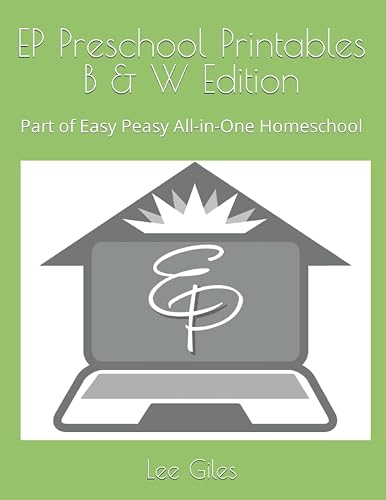
EP Preschool Printables B & W Edition: Part of Easy Peasy All-in-One Homeschool
Best for: Families printing at home on a budget-friendly black-and-white printer.
This edition covers the same general ground as the color version but is laid out for black-and-white printing. Owners who print many pages often mention that the simpler format saves ink and makes it easy to hand a child a crayon or marker for coloring.
Key specs
- Part of the Easy Peasy All-in-One Homeschool collection
- Black-and-white printable pages
- Suitable for standard letter-size paper
Pros
- Lower ink use for frequent printing
- Children can add their own color, which supports fine motor practice
- Same core content as the color edition
Cons
- Less visually appealing for children who respond to bright pictures
- Still requires you to plan how the pages fit into each week
Bottom line: The better pick for parents who print a lot at home and want a plain, practical set their child can color.
Preschool at Home: Daily Lesson Plans for Pre-K Readiness

Preschool at Home: Daily Lesson Plans for Pre-K Readiness: A Structured 30–180 Day Homeschool Program with Printables, Assessments, and Skill-Building Practice for Ages 3–5
Best for: Parents who want a day-by-day structure rather than loose worksheets.
Many parents find that free printables are easy to collect but hard to sequence. This resource is built around a lesson plan structure, with a printable program meant to run anywhere from 30 to 180 days. That makes it useful for parents who value a clear starting point and a sense of progression.
Key specs
- Structured program spanning 30 to 180 days
- Designed for ages 3 to 5
- Includes printable activities, assessments and skill-building practice
Pros
- Clear daily sequence removes guesswork about what to teach next
- Includes assessments to check progress
- Targets pre-K readiness skills specifically
Cons
- Less flexible if your child prefers to move between topics freely
- Requires a consistent daily time commitment to get full value
Bottom line: Best for parents who want a guided plan and are comfortable following a set order.
KinderMath Printables

KinderMath Printables: Part of Easy Peasy All-in-One Homeschool
Best for: Parents who want to focus specifically on early math.
Early number sense is one of the areas where a focused set of printables can help most. KinderMath Printables narrows its scope to math, which makes it a useful companion to a broader reading or art program rather than a complete curriculum on its own.
Key specs
- Part of the Easy Peasy All-in-One Homeschool collection
- Math-focused printable worksheets for kindergarten-readiness
Pros
- Concentrated focus on counting, numbers and early operations
- Pairs well with other free printables for reading and art
- Easy to use for short, daily math practice
Cons
- Covers math only, so it does not replace a full preschool week
- Best suited to children who are ready for number work
Bottom line: A good add-on for parents who want targeted math practice alongside other free materials.
Buying Guide
Choosing among free homeschool preschool printables comes down to a few practical factors. Work through these before you commit to a set.
Subject Coverage
Decide which areas matter most for your child right now. A set that covers letters, numbers, shapes, colors and fine motor skills gives you a full week. A narrower set can work well if you are filling a specific gap, such as early math.
Good picks for this: EP Preschool Printables Color Edition, KinderMath Printables
Print Format and Ink Use
Look at whether the pages are designed for color or black-and-white printing. Color pages are more visually engaging, but black-and-white pages use less ink and let children add their own color. Check the layout against your home printer’s capabilities before you print a full set.
Good picks for this: EP Preschool Printables B & W Edition, EP Preschool Printables Color Edition
Structure and Sequence
Some families want loose activities they can pick from, while others want a set order. If you struggle to plan, a sequenced program can save time. If you prefer flexibility, choose a set of standalone pages.
Good picks for this: Preschool at Home: Daily Lesson Plans for Pre-K Readiness
Age Fit
Most printable sets are aimed at ages three to five, but skill levels vary widely within that range. Look for sets that include a range of difficulty so you can start where your child is and move forward gradually.
Good picks for this: Preschool at Home: Daily Lesson Plans for Pre-K Readiness, EP Preschool Printables Color Edition
Time Commitment
Plan for short sessions. A typical preschool printable activity should take 10 to 15 minutes, and two or three activities per day is often enough. If a set requires much longer blocks, you may need to adapt it.
Good picks for this: KinderMath Printables, EP Preschool Printables B & W Edition
Durability and Reuse
Printed pages tend to wear out quickly when children handle them daily. Consider laminating favorite pages, using dry-erase sleeves, or printing a second copy of activities you use often. A set designed for repeated use will save you reprinting.
Good picks for this: EP Preschool Printables Color Edition, EP Preschool Printables B & W Edition
Support for Parents
Some printable sets include teacher guidance, while others assume you already know how to teach each skill. If you are new to homeschooling, guidance can make the difference between a productive session and a confusing one.
Good picks for this: Preschool at Home: Daily Lesson Plans for Pre-K Readiness, KinderMath Printables
FAQ
Are free homeschool preschool printables enough for a full year?
They can be, but it depends on how much structure you want. Many families combine printables with reading aloud, play and outdoor time. A full-year plan usually works best when you rotate activities and track which skills your child has mastered.
How long should a preschool printable session last?
For most three- to five-year-olds, 10 to 15 minutes of focused work is a good target. Keep sessions short and end while your child is still engaged.
Do I need a special printer for these pages?
No. Most preschool printables are designed for standard letter-size paper on a home inkjet or laser printer. Color pages use more ink, so check your supply before printing a large batch.
Should I choose color or black-and-white pages?
Color pages can be more engaging for some children, while black-and-white pages save ink and allow children to color their own pictures. Many families use both depending on the activity.
How do I know if my child is ready for math printables?
Look for interest in counting, sorting and matching, and whether your child can count to around 10 with some accuracy. If not, start with shape and pattern activities first.
Can I mix printables from different sources?
Yes. Many homeschooling families combine sets. Just keep the difficulty level consistent and make sure the activities support the same skills you are working on that week.
Do I need to consult anyone about my child’s learning plan?
For questions about developmental milestones or learning concerns, a pediatrician or early childhood specialist can give personalized guidance. Printables are a supplement, not a substitute for professional evaluation when you have concerns.
Conclusion
The best free homeschool preschool printables depend on what you need most. The EP Preschool Printables Color Edition suits families who want full-color pages across several subjects. The black-and-white edition is the practical choice for frequent home printing. Preschool at Home: Daily Lesson Plans for Pre-K Readiness fits parents who want a day-by-day sequence, and KinderMath Printables works well for targeted early math practice. Start by identifying your child’s biggest needs, then choose the set that fills them with the least friction.
For more planning help, see Preschool Homeschool Schedule Printable: A Step-by-Step Daily Routine Guide and Homeschool for Preschool Free: A Step-by-Step Guide to Start at No Cost. If you are weighing structured options, Free Homeschool Preschool Curriculum: 5 Best Picks Compared (2026) offers a broader comparison, and Setting Up a Homeschool Preschool: 6 Best Guides and Kits Compared (2026) covers the setup side.
Sources
- Product safety guidance for children's products, including considerations for toys and printed materials used by young children (cpsc.gov)
- Developmentally appropriate practice standards for early childhood learning, including activity length and age expectations
- Federal information on early learning and school readiness (ed.gov)
About Audrey Hayes
Audrey Hayes is part of our editorial team and reviews and edits our early learning at home guides, checking product details against manufacturer specifications and owner feedback.