By Audrey Hayes
Updated November 2026
A montessori homeschool preschool schedule works best when it is visible, flexible and easy for a young child to read without an adult narrating every step. Parents who want that kind of structure usually look for a visual chart they can place at child height, reorder as the day changes and reuse for weeks. This guide compares seven products that fit that need. Our selection criteria were specifications stated by manufacturers, brand reputation for early childhood materials, and patterns that owners commonly describe in their feedback: card size, pocket count, durability of the surface, how easily cards slide in and out, and whether the set suits a home setting rather than a full classroom.
Our top picks at a glance
- 1
 TOP CHOICEBest overallUltra-Durable Visual Schedule for Classrooms or HomeView on Amazon
- 2
 TOP CHOICEBest for routine-building with rewardsLarge Visual Schedule for Kids Chore Reward ChartView on Amazon
- 3
 TOP CHOICEBest for adding to an existing chartLachilly 12 Pcs Daily Routines Schedule CardsView on Amazon
- 4
 Best for dry-erase customizationAuchq Daily Schedule Pocket ChartView on Amazon
- 5
 Best for a decorative classroom-style boardBoho Daily Schedule Pocket Chart for ClassroomView on Amazon
- 6
 Best for a larger pocket layout15+1 Pockets Daily Schedule Pocket ChartView on Amazon
- 7
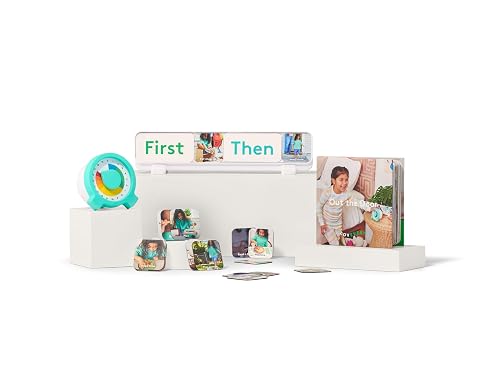 Best for toddler routines and life skillsLovevery Ready for Routines Mini KitView on Amazon
Our Top Picks
| Product | Best for | Key feature |
|---|---|---|
| Ultra-Durable Visual Schedule for Classrooms or Home | Daily sequence charts that get heavy use | 13 pockets, reusable sentence strips |
| Large Visual Schedule for Kids Chore Reward Chart | Routines paired with a reward system | Double-sided board with 109 cards |
| Lachilly 12 Pcs Daily Routines Schedule Cards | Adding routine cards to a chart you already own | 12 pocket-chart add-on cards |
| Auchq Daily Schedule Pocket Chart | Families who want to write in their own activities | 23 activity cards plus 4 blank dry-erase cards |
| Boho Daily Schedule Pocket Chart for Classroom | A calm, neutral look for a shared space | 24 cards in a white boho design |
| 15+1 Pockets Daily Schedule Pocket Chart | Days with many activities to sequence | 16 pockets and 24 double-sided cards |
| Lovevery Ready for Routines Mini Kit | Toddlers building self-care and life-skill routines | Routine-focused kit for ages 18 months and up |
Ultra-Durable Visual Schedule for Classrooms or Home
Ultra-Durable Visual Schedule for Classrooms or Home, Easy to Use, Reusable, Sentence Strips Daily Schedule Pocket Chart, Black, 13 Pockets
Best for: Daily sequence charts that get heavy use
This is a good match for a family that wants a sturdy, no-nonsense chart that stays put on a wall or door and can be reconfigured as the homeschool week changes. Its name suggests use in both classrooms and homes, which makes it adaptable to a Montessori-style learning space.
Key specs
- 13 pockets
- Black frame style
- Reusable sentence strips for daily sequencing
Pros
- Pocket layout supports a clear sequence from morning to bedtime
- Durable construction suited to repeated handling
- Cards can be changed as routines evolve
Cons
- Black finish can look heavier in a bright, minimal room
- Does not include a large set of pre-made activity pictures
Bottom line: Best for parents who want a durable, flexible chart with a classic layout and plan to write or print their own cards.
Large Visual Schedule for Kids Chore Reward Chart
Large Visual Schedule for Kids Chore Reward Chart,Bedtime Routine Chart for Toddlers,Double Side Weekly Planner Board With 109 Cards for Home School Planner,Autism Learning Materials.
Best for: Routines paired with a reward system
Families who want a single board that covers chores, bedtime and weekly planning will find this one useful. Its double-sided format separates daily routines from longer-range planning.
Key specs
- Double-sided board
- 109 cards included
- Designed for chores, bedtime routines and weekly planning
Pros
- Large card count gives room to build a full routine
- Double-sided design covers several uses in one board
- Reward-chart function motivates completion
Cons
- Many cards means more setup time at the start
- Reward focus may not suit every Montessori household
Bottom line: A strong choice for families who want routine tracking and chore rewards alongside the preschool day.
Lachilly 12 Pcs Daily Routines Schedule Cards
Lachilly 12 Pcs Daily Routines Schedule Cards, Schedule Pocket Chart Add-ons, DIY Visual Schedule for Toddlers, Classroom Decoration
Best for: Adding routine cards to a chart you already own
This set suits a parent who has a pocket chart already and wants routine cards to fill it. It is a low-commitment way to build a visual schedule without replacing the whole board.
Key specs
- 12 cards in the set
- Designed as pocket-chart add-ons
- Suitable for toddler and preschool routines
Pros
- Works with existing pocket charts
- Small number of cards keeps the routine focused
- Easy to rotate cards through the day
Cons
- Only 12 cards, so a full day may need more
- Requires a compatible chart to display them
Bottom line: Ideal for parents who already own a pocket chart and only need core routine cards.
Auchq Daily Schedule Pocket Chart
Auchq Daily Schedule Pocket Chart, Visual Schedule for Kids with 23 Activity Cards, 8+1 Pockets, 4 Blank Dry-Erase Cards Included, Great for Classroom Preschool-1 st Gr.(17’’ x 38.5’’ in)
Best for: Families who want to write in their own activities
The included blank dry-erase cards make this chart useful for families who want to customize the day to match a Montessori work cycle, outdoor time or a specific curriculum block.
Key specs
- 8 pockets plus 1 additional pocket
- 23 activity cards
- 4 blank dry-erase cards
- Listed size 17 x 38.5 inches
Pros
- Blank cards allow custom activities
- Large format is easy to read from across a room
- Activity cards cover common preschool blocks
Cons
- Large size may need a dedicated wall space
- Dry-erase cards need regular wiping to stay clear
Bottom line: A practical pick for parents who want a chart they can rewrite as their homeschool plans change.
Boho Daily Schedule Pocket Chart for Classroom
Boho Daily Schedule Pocket Chart for Classroom with 24 Cards,Welcome Back to School Classroom Decorations, White
Best for: A calm, neutral look for a shared space
This chart fits a family that wants the schedule to blend into a living area rather than look like a classroom fixture. The white boho styling is the main draw.
Key specs
- 24 cards included
- White finish
- Pocket layout for daily sequencing
Pros
- Neutral look suits home décor
- Card count supports a full day
- Easy to move between rooms
Cons
- Styling is less important than sturdiness for some families
- Listed as a classroom product, so home fit depends on wall space
Bottom line: Good for parents who want a schedule that looks at home in a shared family room.
15+1 Pockets Daily Schedule Pocket Chart
15+1 Pockets Daily Schedule Pocket Chart with 24 Double Sided Cards, Visual Classroom Schedule Pocket Chart, School Teachers Supplies for Classroom, Boho White
Best for: Days with many activities to sequence
A higher pocket count gives room for a longer day with more transitions, such as morning circle, table work, outdoor play and rest time.
Key specs
- 16 pockets (15 plus 1)
- 24 double-sided cards
- White boho finish
Pros
- High pocket count supports detailed days
- Double-sided cards extend the set
- Clean finish for a shared space
Cons
- Busy layout can overwhelm very young children
- Takes up more wall space than smaller charts
Bottom line: A good fit for families with a full daily rhythm who want every block visible at once.
Lovevery Ready for Routines Mini Kit
Lovevery, Ready for Routines Mini Kit, Toddler Schedule & Life Skills, 18+ Months
Best for: Toddlers building self-care and life-skill routines
This kit is aimed at slightly older toddlers who are learning independent routines. It is less a full day chart and more a tool for building specific habits in a Montessori-inspired way.
Key specs
- Designed for ages 18 months and up
- Focused on toddler schedule and life skills
- Mini format for a single routine focus
Pros
- Strong fit for life-skill routines
- Age-targeted for toddlers
- Compact enough for a small space
Cons
- Not designed to cover a full preschool day
- Best for younger children than a full preschool schedule
Bottom line: Best for parents of toddlers who want to introduce routine-building before a full preschool timetable.
Buying Guide
Board size and placement
Mount the chart at about the height of your child’s shoulders so they can reach the cards without help. Measure the wall first. A 17 x 38.5 inch board, like the Auchq listing, needs a wide, clear space, while smaller card sets fit beside existing shelves.
Good picks for this: Auchq Daily Schedule Pocket Chart, Boho Daily Schedule Pocket Chart for Classroom
Pocket count and sequence length
Count the number of distinct activities in a typical homeschool day. Eight to twelve pockets fit most preschool routines. Sixteen pockets help when your day includes many transitions, but more pockets can overwhelm very young children.
Good picks for this: 15+1 Pockets Daily Schedule Pocket Chart, Ultra-Durable Visual Schedule for Classrooms or Home
Card quality and reusability
Look for cards that slide easily in and out without tearing the pocket edges. Laminated or sturdy stock holds up to daily handling. Dry-erase options let you change activities without reprinting.
Good picks for this: Ultra-Durable Visual Schedule for Classrooms or Home, Auchq Daily Schedule Pocket Chart
Customization and blank cards
Blank cards matter if your Montessori schedule changes with seasons, co-op days or your child’s interests. Check whether the set includes blank cards and whether they are dry-erase or paper.
Good picks for this: Auchq Daily Schedule Pocket Chart, Large Visual Schedule for Kids Chore Reward Chart
Age and developmental fit
A 2-year-old and a 5-year-old need different levels of detail. Younger children do better with three to five cards that show one clear sequence. Older preschoolers can handle longer charts with more text or pictures.
Good picks for this: Lovevery Ready for Routines Mini Kit, Lachilly 12 Pcs Daily Routines Schedule Cards
Durability and care
Wipe dry-erase surfaces with a soft cloth and a mild cleaner that the manufacturer allows. Keep paper cards away from direct sun and moisture. Replace worn pocket fronts before cards start to slip out.
Good picks for this: Ultra-Durable Visual Schedule for Classrooms or Home, 15+1 Pockets Daily Schedule Pocket Chart
Setup and reuse across the week
Plan to reorder cards weekly. A chart that supports quick changes helps you keep the day predictable while still flexible. Keep a few spare blank cards for surprises like weather changes.
Good picks for this: Large Visual Schedule for Kids Chore Reward Chart, Auchq Daily Schedule Pocket Chart
FAQ
What is a montessori homeschool preschool schedule?
It is a daily or weekly plan that sequences learning and routine blocks in a way that supports independence, hands-on work and uninterrupted work periods. Many families display it as a visual chart so the child can see what comes next.
How many activities should a preschool day include?
Most families plan five to eight blocks for a half-day session, including a morning routine, two or three work periods, outdoor time, a snack and a closing routine. Adjust based on your child’s attention span.
Do I need a pocket chart to follow a Montessori schedule?
No. A pocket chart is convenient, but a simple wall list, a visual timeline or a set of picture cards works too. The key is that the child can see and read the sequence.
Should a toddler use the same chart as a preschooler?
Not necessarily. Toddlers usually benefit from fewer cards with bold pictures. Preschoolers can handle more detail. A toddler-focused kit may suit younger children better than a full classroom chart.
How often should I change the schedule?
Review it every few weeks or when your child outgrows a routine. Small changes, such as swapping one activity card, are often enough. Large changes work best at natural breaks, like the start of a new term.
Can a visual schedule help with transitions?
Many parents find that a visible sequence reduces questions about what comes next, which can make transitions smoother. Results vary by child, so treat the chart as one support among several.
Conclusion
For a durable, flexible chart that can be rearranged as your homeschool year changes, the Ultra-Durable Visual Schedule is a sensible starting point. Families who want a routine-and-reward board will find the Large Visual Schedule for Kids Chore Reward Chart more suitable. If you already own a pocket chart, the Lachilly card set adds routine cards without a full replacement. Parents who plan to write their own activities should consider the Auchq chart, while those who want a neutral look may prefer the Boho chart. For busy days, the 15+1 pocket layout gives the most room, and for toddlers working on life skills, the Lovevery Ready for Routines Mini Kit is the most targeted choice. Match the product to your child’s age, your wall space and how often you plan to change the schedule.
Sources
- Safety guidance for children's products, including mounting and small-part considerations for home furnishings (cpsc.gov)
- Research summaries on early childhood routines and executive function development (nih.gov)
- Position statements and resources on developmentally appropriate practice for young children
Related reading
- Schedule for Homeschool Preschool: A Flexible Daily Plan That Works
- Preschool Homeschool Schedule Printable: A Step-by-Step Daily Routine Guide
- Preschool Homeschool Schedule Ideas: A Step-by-Step Daily Plan
About Audrey Hayes
Audrey Hayes is part of our editorial team and reviews and edits our early learning at home guides, checking product details against manufacturer specifications and owner feedback.